


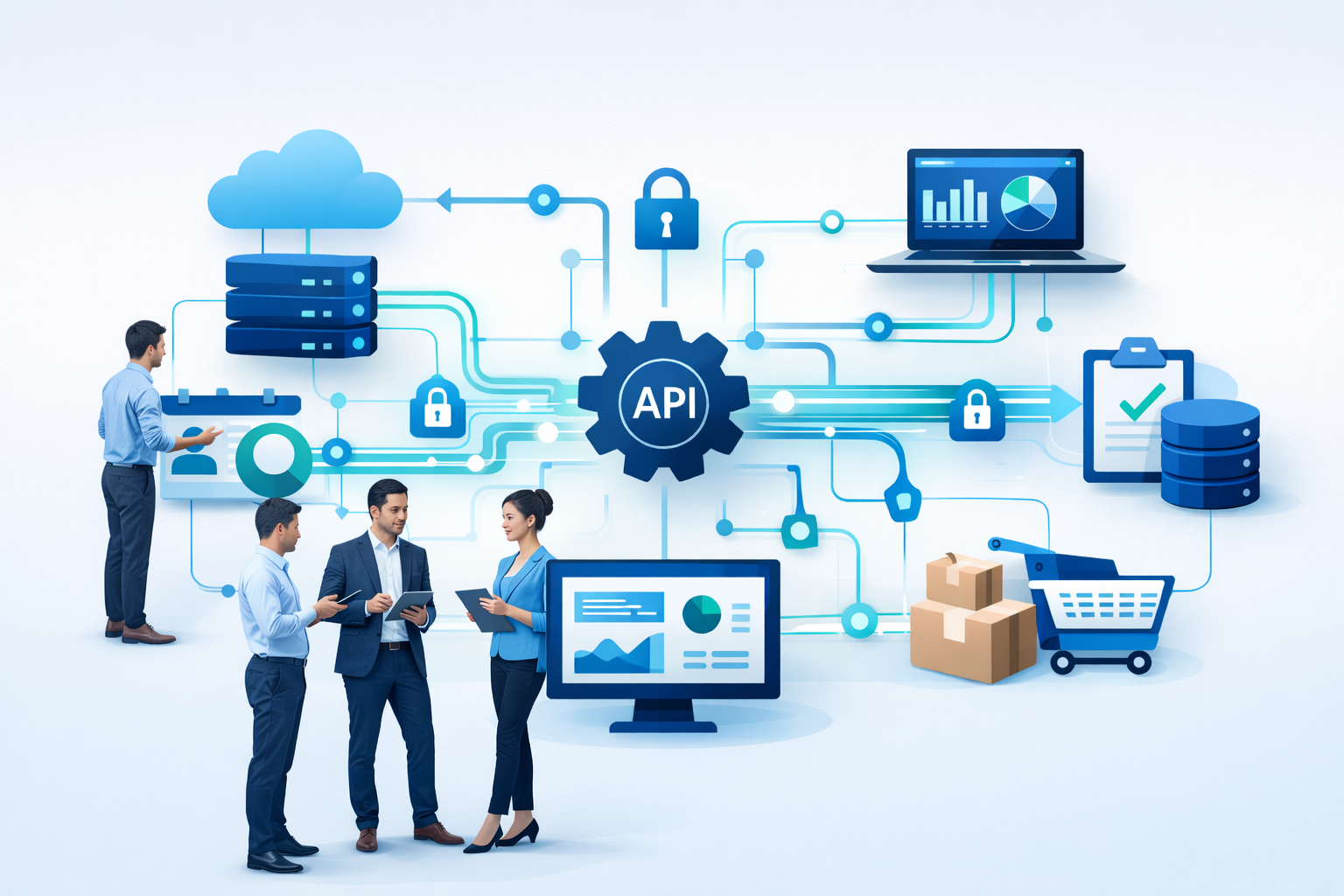
Understanding how Systems Communicate in organizations is a core concept in technology fundamentals. In today’s digital environment, businesses rely on multiple software platforms, databases, and cloud applications that must exchange information seamlessly. When systems communicate effectively, data flows automatically between departments, tools stay synchronized, and operations run efficiently. Without proper system communication, organizations face delays, errors, and disconnected workflows.
Understanding how systems communicate in organizations is a foundational concept in technology fundamentals. Whether you are a business owner, IT beginner, operations manager, or startup founder, learning how digital systems exchange information will help you make smarter technology decisions and avoid costly integration mistakes.
This beginner-friendly guide explains how system communication works, why it matters, and the core technologies that power it.
What Does “System Communication” Mean?
System communication refers to the way different software applications, platforms, and devices exchange data with one another. Modern organizations often rely on integrated collaboration environments that allow multiple applications and platforms to exchange information seamlessly across departments.
Inside an organization, this might include:
- An HR system sending payroll data to accounting software
- A CRM platform updating sales records in a reporting dashboard
- An eCommerce website syncing inventory with warehouse management software
- A time-tracking app feeding hours into a payroll system
Without communication between systems, businesses would rely on manual data entry, spreadsheets, and duplicated work — which leads to errors, delays, and inefficiencies.
At its core, system communication is about data flow.
Why System Communication Is Critical in Organizations?
When systems communicate properly, organizations experience:
1. Operational Efficiency
Automated data transfer eliminates repetitive manual work.
2. Data Accuracy
Direct system integration reduces human error.
3. Real-Time Visibility
Leaders can access updated dashboards and reports instantly.
4. Scalability
As organizations grow, connected systems handle larger workloads.
5. Better Decision-Making
Reliable data flow ensures accurate insights for strategic planning.
In contrast, disconnected systems create “data silos,” where departments operate in isolation, limiting collaboration and visibility.
The Basic Components of System Communication
To understand how systems communicate, you need to know the building blocks.
1. Sender System
The application that initiates data transmission.
2. Receiver System
The application that receives and processes the data.
3. Communication Protocol
The rules that define how data is structured and transmitted.
4. Data Format
The structure used to package information (such as JSON or XML).
5. Network Infrastructure
The pathway that allows systems to connect (internet, cloud, private network).
These components form the foundation of digital communication inside organizations.
Common Methods Systems Use to Communicate
Modern organizations use several technical approaches to enable communication between systems.
1. APIs (Application Programming Interfaces)
An API is one of the most common ways systems communicate.
An API acts like a messenger between two applications. It allows one system to request data or trigger actions in another system.
For example:
- A mobile app retrieves user data from a server.
- A CRM sends customer information to an email marketing platform.
APIs use standardized rules so developers can build integrations reliably.
Why APIs Matter:
- Scalable
- Secure
- Flexible
- Widely supported
APIs are the backbone of modern cloud software communication.
2. Webhooks
A webhook is an automated message sent from one system to another when a specific event occurs.
Instead of constantly asking for updates, the receiving system waits for a notification.
Example:
- When a customer places an order, the eCommerce system automatically notifies the shipping platform.
Webhooks are event-driven and efficient.
3. File-Based Transfers
Some organizations still rely on structured files to transfer data between systems.
Common formats include:
- CSV
- XML
- JSON
For example:
- Payroll exports a CSV file that accounting imports.
- A vendor uploads inventory updates via XML.
This method is older but still widely used in enterprise environments.
4. Direct Database Connections
In some setups, systems connect directly to another system’s database.
While fast and efficient, this method can:
- Create security risks
- Reduce flexibility
- Increase system dependency
Modern architecture usually prefers APIs instead.
5. Middleware and Integration Platforms
Middleware acts as a bridge between systems.
Instead of connecting every system individually, organizations use integration platforms that manage all connections centrally.
Examples of integration solutions include:
- Enterprise Service Bus (ESB)
- iPaaS (Integration Platform as a Service)
- Automation tools
Middleware improves scalability and simplifies complex environments.
Types of System Communication in Organizations
System communication can be categorized based on timing and architecture.
1. Synchronous Communication
In synchronous communication, the sender waits for a response.
Example:
- A payment system requests authorization and waits for approval.
This is common in real-time transactions.
2. Asynchronous Communication
In asynchronous communication, the sender does not wait for an immediate response.
Example:
- A system logs data and processes it later.
This improves system performance and resilience.
3. Point-to-Point Integration
One system directly connects to another.
Simple but difficult to scale if many systems are involved.
4. Hub-and-Spoke Architecture
A central hub manages communication between systems.
This model is more scalable and organized.
How Cloud Computing Changed System Communication?
Cloud computing transformed how systems communicate.
Before cloud systems:
- Communication was often limited to internal networks.
- Integrations required heavy infrastructure.
Now:
- Systems connect over the internet.
- APIs enable global connectivity.
- Organizations use SaaS platforms with built-in integrations.
Cloud-native architectures prioritize:
- Scalability
- Security
- Real-time processing
- Standardized APIs
This shift allows businesses of all sizes to build sophisticated digital ecosystems.
Data Formats Used in System Communication
Data format standardization is essential for smooth communication.
JSON (JavaScript Object Not
ation)
- Lightweight
- Easy to read
- Popular in web APIs
XML (Extensible Markup Language)
- Structured
- Common in enterprise systems
CSV (Comma-Separated Values)
- Simple
- Used for file transfers
Standard formats ensure systems interpret data correctly.
Security in System Communication
Security is critical when systems exchange information.
Organizations must protect:
- Customer data
- Financial records
- Employee information
- Intellectual property
Common security measures include:
Encryption
Data is encrypted during transmission.
Authentication
Systems verify identity before communication.
Authorization
Access is limited based on permissions.
API Keys and Tokens
Secure credentials manage system access.
Without security controls, integrations can expose organizations to breaches.
Challenges in Organizational System Communication
Despite technological advancements, organizations still face challenges.
1. Legacy Systems
Older software may not support modern APIs.
2. Data Silos
Departments use disconnected systems.
3. Inconsistent Data Formats
Mismatched formats create integration errors.
4. Scalability Issues
Point-to-point integrations become complex.
5. Poor Documentation
Lack of clarity leads to fragile integrations.
Understanding these challenges helps leaders plan better system architecture.
Best Practices for Effective System Communication
To ensure reliable system communication in organizations, follow these best practices:
1. Use Standardized APIs
Choose software with well-documented APIs.
2. Prioritize Security
Implement encryption and authentication protocols.
3. Design for Scalability
Avoid excessive point-to-point integrations.
4. Monitor Data Flow
Use monitoring tools to detect failures.
5. Maintain Documentation
Keep integration maps and system architecture diagrams updated.
6. Plan for Change
Technology evolves. Choose flexible systems.
Strong planning reduces technical debt and future integration costs.
Real-World Example: System Communication in a Growing Business
Consider a mid-sized retail company.
Its systems may include:
- eCommerce platform
- Inventory management system
- Accounting software
- CRM
- Shipping provider
- Business intelligence dashboard
When a customer places an order:
- The website records the purchase.
- Inventory updates automatically.
- Accounting logs revenue.
- CRM records customer activity.
- Shipping receives order details.
- Dashboard updates sales metrics.
All of this happens because systems communicate seamlessly.
Without integration, employees would manually enter the same data multiple times.
The Future of System Communication in Organizations
Technology continues to evolve.
Emerging trends include:
- Microservices architecture
- Event-driven systems
- AI-powered integration tools
- Low-code automation platforms
- Real-time data streaming
Organizations that understand system communication fundamentals are better prepared to adopt advanced technologies.
Final Thoughts: Why Understanding System Communication Matters
System communication in organizations is not just a technical concept. It is a strategic advantage.
When systems communicate effectively:
- Operations run smoothly
- Data remains accurate
- Teams collaborate efficiently
- Leaders make informed decisions
- Businesses scale confidently
For beginners, learning how systems communicate provides a strong foundation in technology fundamentals. For decision-makers, it helps evaluate software investments wisely.
In a digital-first world, organizations are no longer just people and processes. They are interconnected systems exchanging information every second.
Understanding how those systems communicate is essential for building efficient, secure, and future-ready organizations.