


A few years into this job, I learned the hard way that metal fabrication quality standards only protect you if you check how a supplier actually applies them. I approved a new fabrication supplier mostly because of a framed ISO 9001 certificate in their lobby. The quote was sharp, the plant was clean, and the owner gave a great tour. Six weeks later, I stood in our receiving area looking at forty brackets with undercut along every fillet weld and a material cert that listed a heat number I couldn’t find anywhere on the parts.
When I went back and actually read that certificate, the scope covered “distribution of steel products.” Not fabrication. Not welding. The certificate was real. It just didn’t say what I assumed it said.
That one cost us about three weeks of schedule and a very uncomfortable call with our customer. It also changed how I qualify suppliers. Since then I’ve audited a lot of shops, from five person job shops to plants running three shifts of robotic welding, and I’ve learned that the most useful thing a buyer can do is ask better questions. Not more questions. Better ones.
This article is the list I wish someone had handed me back then. If you buy fabricated metal parts, whether that’s structural steel, sheet metal enclosures, weldments, or machined and welded assemblies, these are the metal fabrication quality standards and practices you should ask about before you place a production order.
Why Metal Fabrication Quality Standards Start With a Certificate, Not End There
Most buyers already know to ask “are you certified?” The problem is that a yes answer tells you very little on its own.
A quality management system certificate tells you that an auditor visited, looked at a sample of the shop’s processes, and found the shop following its own system on the days of the audit. That’s valuable. It doesn’t guarantee that your specific part, built to your specific drawing, will come out right.
Even the structural steel world says this openly. As Charles Peshek explained in AISC’s Engineering Journal, the AISC Quality Certification Program does not involve inspection or judgment of product quality on individual projects, nor does it guarantee the quality of specific fabricated steel products. What it does is confirm the shop has the capability and the system to produce quality work. That’s the right way to think about all metal fabrication quality standards. They’re evidence of capability, and your job as a buyer is to connect that capability to your part.
The Metal Fabrication Quality Standards That Actually Matter
Before getting into the questions, here’s a quick map of the metal fabrication quality standards you’ll hear about most. You don’t need to memorize them, but you should know which ones belong in your industry.
- ISO 9001:2015. The baseline quality management system standard. It covers document control, training, calibration, corrective action, supplier control and management review. Nearly every serious fabricator should have it or be working toward it.
- AS9100D. ISO 9001 plus aerospace and defense requirements. It adds tighter controls on configuration management, risk, counterfeit parts prevention and product safety. If you buy for aerospace, expect it.
- IATF 16949. The automotive equivalent. Most fabricators supplying Tier 1 automotive programs will need it, or at least need to operate in a way that supports PPAP submissions.
- ISO 3834. North American buyers often overlook this one. It sets quality requirements specifically for fusion welding. ISO 9001 tells you the shop has a system; ISO 3834 tells you someone who understands welding has looked at the welding part of that system. It targets fusion welding quality with three compliance tiers, and it matters a lot if you sell into Europe.
- AISC Certification. For structural steel buildings and bridges in the United States, this is the most recognized program. AISC audits the fabricator against its standard and against real contract requirements, which complements any structural engineering inspection done on site.
- EN 1090. Europe requires it for structural steel and aluminum components, with execution classes that scale with risk.
- Welding codes such as AWS D1.1 (structural steel), AWS D1.2 (aluminum), AWS D1.3 (sheet steel), AWS D1.6 (stainless) and ASME Boiler and Pressure Vessel Code Section IX. These aren’t shop certifications in the same sense. They’re the rulebooks shops use to build and qualify their welds.
Now, the questions.
Question 1: “Can I See Your Certificate, and What Does the Scope Actually Cover?”
This is the question that would have saved me those forty brackets.
Ask for a copy of every certificate the supplier claims. Then read three things on it: the scope statement, the site address and the expiration date. A company can hold a legitimate certificate that only covers one location, or one activity, while the work you’re buying happens somewhere else.
Then verify it independently. ISO itself doesn’t issue certificates, so a certificate is only as good as the certification body behind it and the accreditation body that oversees that certifier. The IAF CertSearch database shows the validity and status of a certificate, the standard, the scope of certification, certified locations, the issuing certification body and the accreditation body behind it. It takes about two minutes. I check every new supplier there, and I recheck at every requalification.
I’ve found certificates that the issuing body had suspended, certificates from bodies with no recognized accreditation, and once, a certificate where someone had edited the company name. That last one ended the conversation.
What good looks like: The supplier sends the certificate without hesitation, the scope clearly names fabrication and welding (or whatever processes apply to you), the site matches where they’ll build your parts, and it shows up as valid in CertSearch.
Question 2: “Which Welding Code Do You Build To, and Can I See the WPS and PQR?”
If your part has a weld on it, this question matters more than almost anything else on this list.
Know What You’re Asking For
A Welding Procedure Specification (WPS) is the recipe. It tells the welder the process, filler metal, amperage range, voltage, travel speed, preheat, joint design and position. A Procedure Qualification Record (PQR) is the proof that the recipe works: the shop made a test weld, cut it up, tested it mechanically, and it passed. The Welder Performance Qualification (WPQ) proves the person holding the torch can actually execute it.
AWS describes the purpose of a WPS as allowing welders to consistently produce welds that meet desired requirements without any rework. That’s exactly what a buyer pays for: consistency.
Here’s where buyers get tripped up. Under AWS D1.1, shops can build some joints using prequalified procedures, which means they don’t need a PQR as long as they stay inside the code’s prequalified limits. That’s legitimate. ASME Section IX, on the other hand, requires the shop to qualify procedures by testing. If a supplier tells you they “weld to D1.1” but can’t produce a single written WPS, that’s not a prequalified procedure. That’s no procedure.
The Documents I Request
When I review weld documentation, I ask for:
- The WPS the shop will use on my part, one that matches my base metal, thickness range and joint types
- The supporting PQR, where the procedure needs one
- Current WPQ records for the welders likely to work on my job
- The welder continuity log, which shows each welder has used the process recently enough to keep their qualification active
That last item catches more problems than people expect. A welder who qualified three years ago and hasn’t run that process in eight months may not be current under the code. Shops that invest in manufacturing workforce training usually track this without being asked.
Match Metal Fabrication Quality Standards to the Part
It’s also worth knowing what a code does and doesn’t cover. As The Fabricator points out, AWS D1.1 does not govern all welding in the U.S. A shop building a stainless food processing frame to D1.1 is using the wrong rulebook. Ask which code fits your part, and listen to whether the answer makes sense.
Question 3: “How Do You Trace Material From the Mill to My Finished Part?”
Material traceability sounds like paperwork until you have a field failure and need to know which heat of steel went into which assemblies.
Start With the Mill Certificate
Every reputable mill ships material with a Mill Test Report (MTR), which some people call a Mill Test Certificate. It lists the heat number, chemical composition and mechanical properties like yield strength, tensile strength and elongation.
The European standard EN 10204 sorts these certificates into types that increase in independence. As Project Materials explains, a Type 3.1 certificate gives actual chemical composition and mechanical properties measured on the supplied batch. A Type 3.2 adds validation by an independent inspector or the purchaser’s representative, which costs more and adds lead time.
For most commercial work, 3.1 (or a North American CMTR, which is functionally equivalent) is the right call. For pressure equipment, nuclear, offshore or certain defense work, your customer may require 3.2.
Follow the Heat Number Through the Shop
The certificate is only half the story. What I really want to know is how the heat number survives the trip through the shop. Ask the supplier to walk you through it:
- How does your receiving team check incoming material against the MTR?
- How do you transfer the heat number when you cut a plate into smaller pieces? Paint stick, stamp, etched tag, barcode?
- How do you mark remnants so a leftover piece of 316 stainless doesn’t end up in a 304 job? (Good inventory management for manufacturers covers remnants, not just full stock.)
- Can you produce, for a finished assembly, a list of every heat number that went into it?
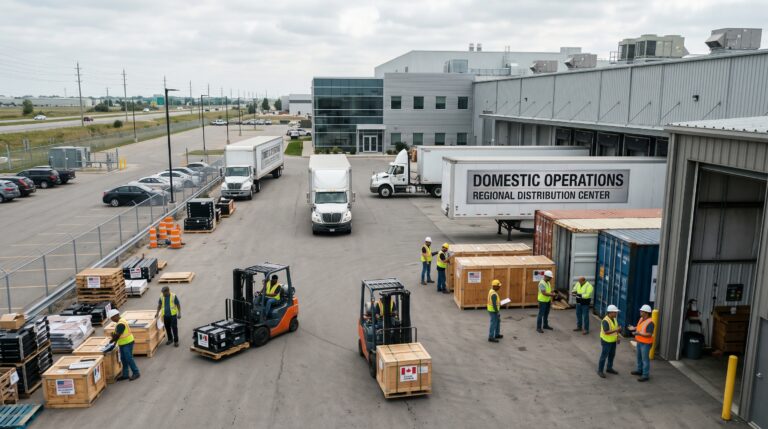
The best shop I ever audited could pull up a weld map for a finished frame and show me the heat number of every member, the welder ID on every joint and the inspection record, all within about five minutes. The worst one had a stack of MTRs in a filing cabinet and no way to connect any of them to a part.
When Paperwork Isn’t Enough
If you buy stainless, aluminum or any alloy where a mixup is invisible to the naked eye, ask whether they run positive material identification (PMI) on incoming stock. A handheld XRF gun doesn’t cost much anymore, and it catches mislabeled material that paperwork never will. It’s the last line of defense for your engineering material selection decisions.
Question 4: “Who Inspects, and What Are They Qualified to Do?”
Inspection is only as reliable as the person doing it and the instruments they use.
For welding, I want to know if the shop has a Certified Welding Inspector (CWI) on staff or under contract. A CWI knows the acceptance criteria in the code and knows how to apply them. Visual inspection from someone without training is mostly a vibe check.
For nondestructive testing such as ultrasonic, magnetic particle, dye penetrant or radiography, ask who performs it and at what level they hold certification. Typically you want a Level II technician interpreting results. If the shop subcontracts NDT, that’s fine, but ask how they qualified the subcontractor and whether you can see their certifications.
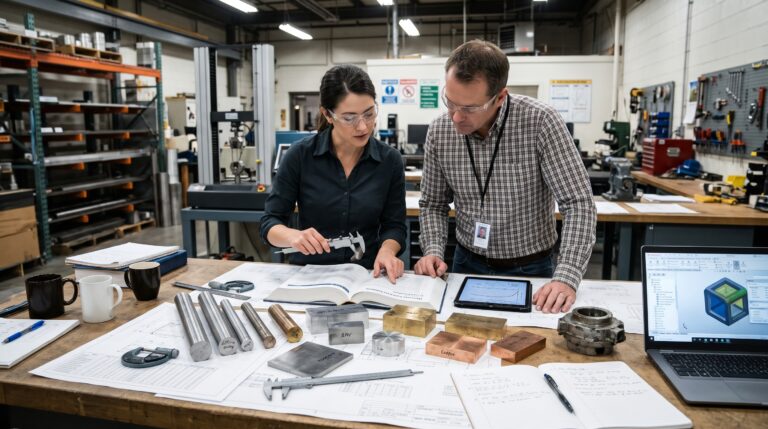
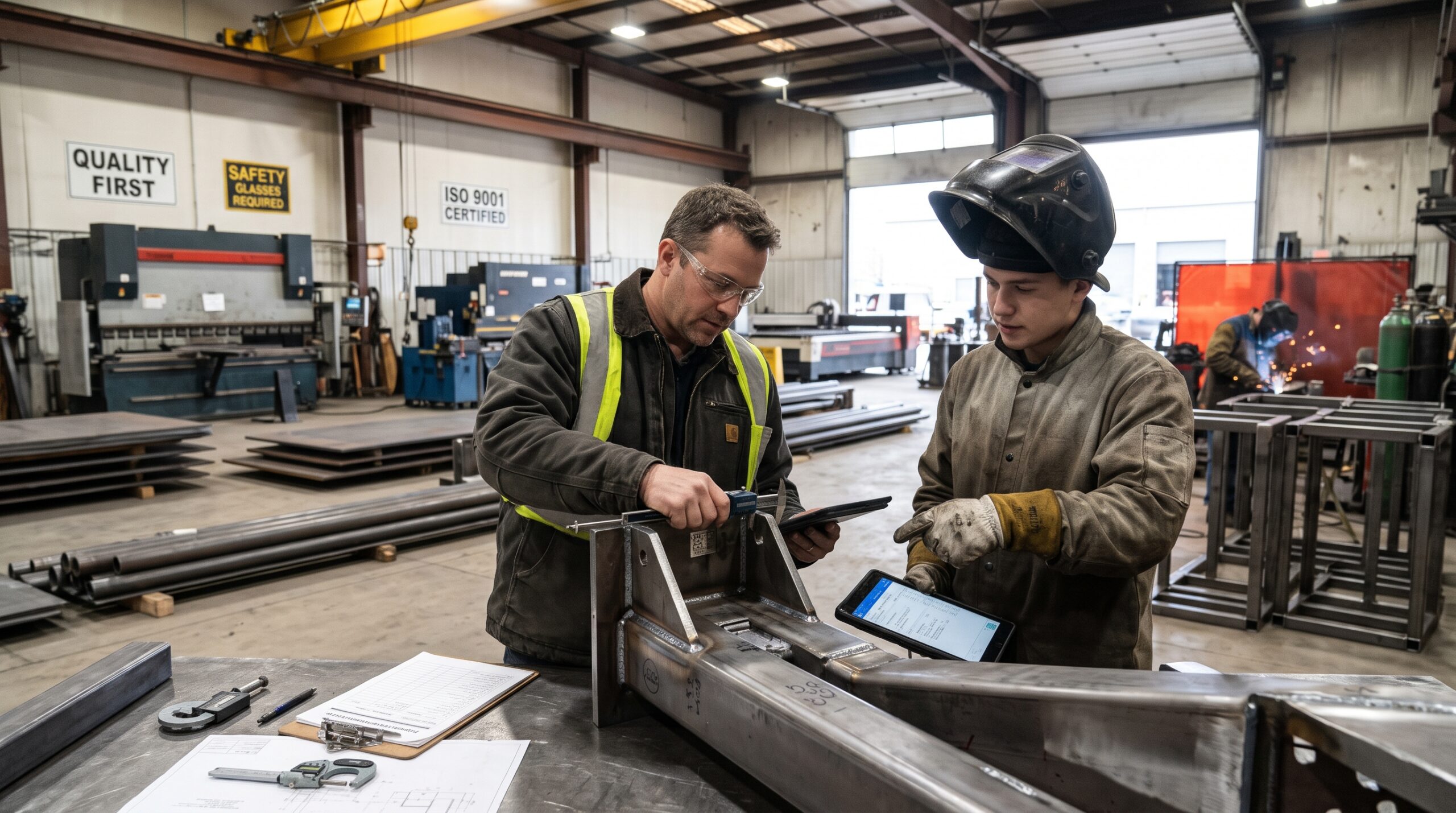
For dimensional inspection, ask about calibration. Every measuring instrument the shop uses for acceptance, whether that’s a caliper, a height gauge, a CMM or a weld fillet gauge, should sit on a calibration schedule with traceable records. When I walk the floor during an audit, I’ll pick up a random caliper and ask to see its calibration record. It’s a quick, honest test of whether the system is real.
Also ask about sampling. Do they inspect every part, the first and last of each lot, or a statistical sample? There’s no single right answer, but they should have a written answer as part of their manufacturing quality control process, and it should match the risk of your part.
Question 5: “How Do You Prove the First Part Is Right?”
First article inspection (FAI) is where a supplier proves their production process can make your part to every requirement on the drawing, not just the critical ones.
How AS9102 Structures It
In aerospace, AS9102 formalizes this. As Quality Magazine explains, an AS9102 first article inspection report consists of three forms: one for part number accountability, one for product accountability covering materials and special processes, and one for characteristic accountability, which lists and verifies every single dimension and note on the drawing. The inspector “balloons” the drawing, adding a numbered bubble to each requirement, and those numbers tie directly to the inspection results.
First Articles and Metal Fabrication Quality Standards Outside Aerospace
Even if you’re nowhere near aerospace, I strongly recommend asking for an FAI on new parts, revised parts and parts moving to a new supplier. If your customer has not made specific FAI requirements, you can still use AS9102 as a guideline. I do this for industrial equipment frames, electrical enclosures and basically anything going into production volume.
A full FAI tells you something a quick dimensional check never will: whether the supplier actually read your entire drawing. I’ve had suppliers miss a general note about deburring all edges, a callout for a specific thread class and, once, a requirement to stamp the part with our part number and revision. Every one of those surfaced in the FAI, before we had five hundred parts on a truck.
Also ask when they redo a first article. Good triggers include a design change that comes through engineering change management, a process change, new tooling, a move to a different location, or a long gap in production. Two years without running a part is a common threshold.
Question 6: “What Happens When Something Goes Wrong?”
Every shop makes bad parts sometimes. What separates good suppliers from risky ones is how they respond.
Ask to see their nonconformance process. When someone finds a bad part, how do they tag and segregate it? Who decides whether to scrap it, rework it or send it to the customer for a deviation? Does the supplier notify you before anyone makes a “use as is” decision on your part? That last one should be a firm yes, and you should put it in your purchase order.
Then ask for a corrective action they’ve actually closed. Not a template. A real one, with names and dates redacted if they prefer. I look for evidence of genuine root cause analysis, whether that’s an 8D, a 5 Why or a fishbone diagram, and a fix that addresses the system rather than the person. “We retrained the welder” as the only action is a weak answer. “We redesigned the fixture so nobody can misalign the joint, and we added a fit up check to the WPS” is a strong one.
I also ask how many open corrective actions they have and how old the oldest one is. A shop with a few open actions is normal. A shop with forty actions open for over a year has a system that exists only on paper.
Question 7: “How Do You Handle Tolerances I Didn’t Write?”
This one sounds odd, but it causes a surprising number of disputes.
Drawings rarely put a tolerance on every single feature. Most rely on a title block tolerance or a general tolerance standard such as ISO 2768. If your drawing uses GD&T, it likely follows ASME Y14.5. The question is whether your supplier understands those references and whether their process can hold them.
Ask how they review contracts and drawings before they quote. A good supplier will come back to you with questions: “Your flatness callout on this 2 meter frame is going to be tough after welding. Can we talk about stress relieving or machining after weld?” That kind of pushback is a gift. It means someone actually studied your drawing, and it’s design for manufacturability feedback you’d otherwise pay a consultant for.
A supplier that quotes everything with zero questions either has a very mature process or didn’t read closely. Usually it’s the second one.
For high volume parts, ask about process capability. If a dimension is critical, a Cpk study on the first production run tells you whether the process runs centered and stable, or whether it’s going to drift out of tolerance next month.
Question 8: “How Do You Control Finishing and Outside Processes?”
Plenty of fabrication defects aren’t fabrication defects at all. They come from the galvanizer, the powder coater, the plating house or the heat treater, all of which shops often send work out to.
Ask which processes they run in house and which they send out. For each outside process, ask:
- How they approved the subcontractor and how often they reevaluate them
- Which standard governs the process, for example ASTM A123 for hot dip galvanizing, ASTM A967 for passivation of stainless or a specified coating thickness and adhesion test for powder coat
- Whether certifications come back with the parts and whether the shop keeps them with the job record
- How they flow your requirements down to the subcontractor
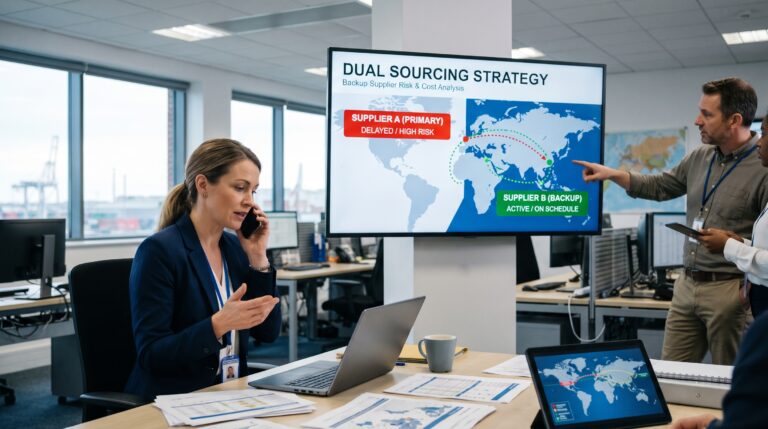
In aerospace and defense, special processes like heat treating, NDT and chemical processing often require Nadcap accreditation, and your customer may dictate exactly which subtier suppliers your fabricator can use. Even outside those industries, the principle holds. Your supplier is responsible for their supplier’s work, and good metal fabrication quality standards reach all the way down that chain. A proper supply chain risk assessment should map those subtier shops too.
Red Flags That Signal Weak Metal Fabrication Quality Standards
After enough audits, certain patterns stand out. None of these automatically disqualify a supplier, but each one earns a closer look:
- Certificates that arrive slowly or not at all. A shop proud of its system will email it within the hour.
- “We’ve always done it this way.” Experience is valuable, but undocumented processes walk out the door when a key person retires.
- No written WPS for welded parts. Full stop.
- MTRs that don’t match the material. Wrong grade, wrong thickness, or a heat number nobody marked on the material.
- Calibration stickers that expired months ago. It’s a small thing that tells you a lot.
- A quality manager who also runs production and shipping. Not always a problem in small shops, but ask how they resolve conflicts between schedule and quality.
- No questions during quoting. As mentioned above, silence usually means nobody read the drawing closely.
Put Metal Fabrication Quality Standards in Your Purchase Order
Here’s the part buyers skip most often. Asking good questions during qualification is great. But if you don’t write the metal fabrication quality standards you expect into the purchase order, you have very little leverage when things go sideways. Clear flow down terms belong in every industrial procurement strategy, not just the ones built for price shocks.
A solid PO for fabricated parts should specify:
- The governing welding code and edition
- The required material certification type, such as EN 10204 3.1
- Whether you require a first article inspection report, and in what format
- Required inspection or NDT, with acceptance criteria
- Finishing standards and required documentation
- Notification requirements for nonconformances, process changes and changes of subtier suppliers
- Record retention requirements
- Your right to audit the supplier’s facility
None of this is unusual. Good suppliers expect it, and the ones who push back hard on reasonable flow down requirements are telling you something useful.
The Bottom Line on Metal Fabrication Quality Standards
Metal fabrication quality standards exist because the people who wrote them learned the hard way what goes wrong. Certificates, codes and procedures aren’t bureaucracy for its own sake. They’re how a shop proves it can make your part the same way every time.
But a standard on paper only protects you if you ask how the shop applies it to your part. Read the scope. Verify the certificate. Look at the WPS. Follow a heat number through the shop. Ask for a first article. Ask to see a corrective action they actually closed.
I’ve never regretted asking one of these questions. I’ve regretted not asking plenty of times, starting with those forty brackets.
Frequently Asked Questions About Metal Fabrication Quality Standards
What are the most important metal fabrication quality standards for buyers?
For most buyers, ISO 9001 is the baseline, combined with the welding code that matches the part, such as AWS D1.1 for structural steel or ASME Section IX for pressure work. Industry specific standards like AS9100D, IATF 16949, AISC Certification or ISO 3834 apply depending on your market. The Craftsmen Industries guide to fabrication certifications gives a useful overview.
How can I verify a fabricator’s ISO 9001 certificate?
Search the company name or certificate number in the IAF CertSearch database and confirm the status, scope and certified site. ISO’s guidance on verifying an accredited certification explains the process, and NSF’s overview of IAF CertSearch covers how to search.
What is the difference between a WPS and a PQR?
A WPS is the written welding instruction; a PQR is the test record proving that instruction produces sound welds. The AWS WPS/PQR Explained course page outlines the essential variables each document covers.
Do I need an EN 10204 3.1 or 3.2 material certificate?
Type 3.1 is standard for most commercial and industrial work. Type 3.2 adds independent witness validation, and usually only high consequence applications or specific contracts call for it. See Project Materials’ comparison of 3.1 and 3.2 certificates.
Is first article inspection only for aerospace?
No. AS9102 formalized it for aerospace, but any buyer can request a first article report on new or changed parts. Quality Magazine’s guide to creating an AS9102 report is a practical place to start.
Does AISC Certification guarantee my steel will be defect free?
No. It confirms the fabricator has the people, procedures and system to deliver quality, but it does not inspect individual projects. You can search certified fabricators through AISC Certification Programs.
References
- American Welding Society. AWS D1.1/D1.1M:2025 Structural Welding Code, Steel
- American Welding Society. WPS/PQR Explained
- Davis, D. The Fabricator. What Welders and Other Metal Fabricators Should Know About AWS D1.1
- IAF CertSearch. Certificate Verification Guide
- International Organization for Standardization. How to Verify an Accredited Certification
- NSF. What You Need to Know About IAF CertSearch
- Project Materials. Mill Test Certificate: EN 10204 3.1 vs 3.2
- Quality Magazine. How to Create an AS9102 First Article Inspection Report
- InspectionXpert. AS9102 First Article Inspection Report Guide
- American Institute of Steel Construction. AISC Certification Programs
- Peshek, C. AISC Engineering Journal. The AISC Quality Certification Program
- Craftsmen Industries. Industrial Fabrication Certifications Explained