


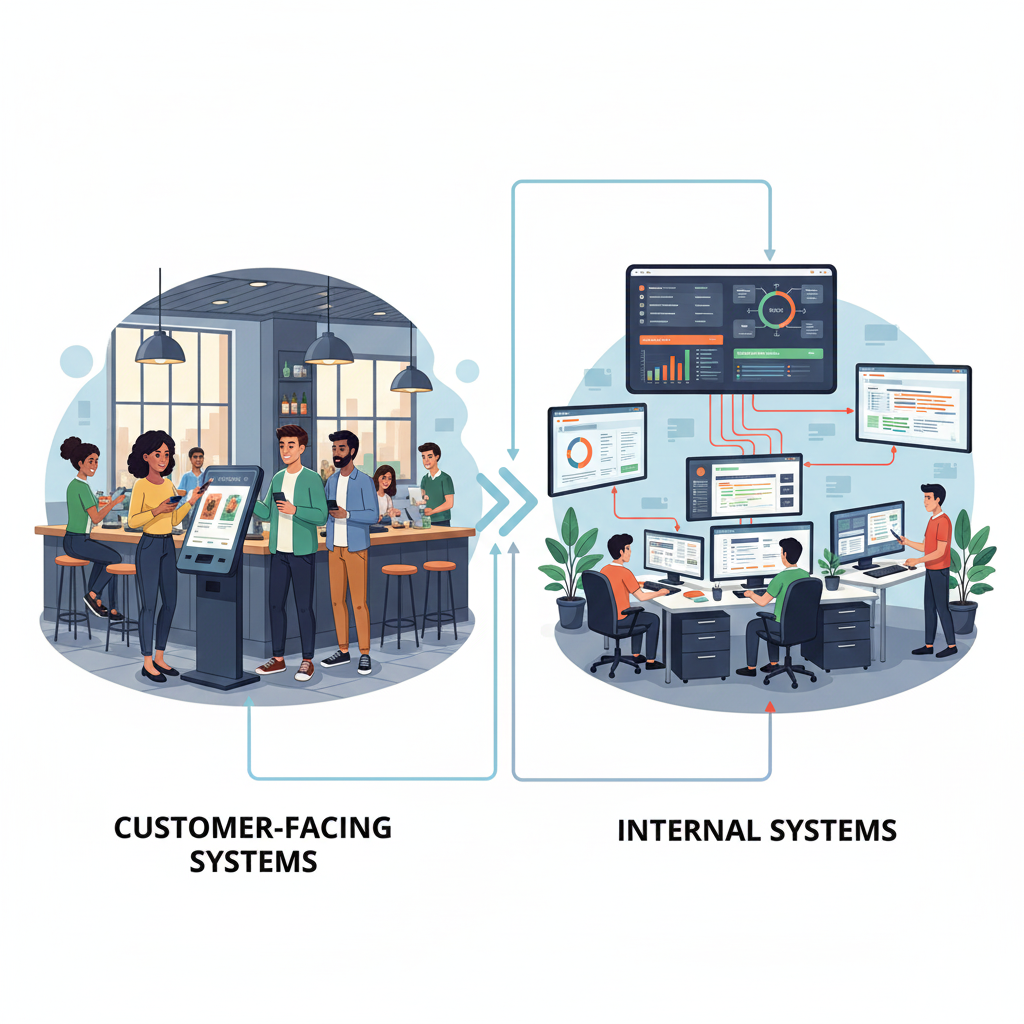
Customer-facing vs internal systems play a critical role in the modern digital landscape, where businesses rely heavily on software platforms and applications to drive efficiency, engagement, and growth. This distinction is one of the most important considerations in enterprise software architecture, directly influencing how organizations serve customers and support internal operations. Understanding the differences, purposes, and best practices for implementing customer-facing vs internal systems is essential for executives, IT managers, and operations professionals seeking to optimize customer experience while maximizing internal productivity.
Defining Customer-Facing and Internal Systems
Software platforms can be broadly classified into two main categories: customer-facing systems and internal systems, based on the primary users and objectives.
Customer-Facing Systems
Customer-facing systems are applications and platforms designed for direct interaction with customers or end-users. Their primary goal is to provide seamless, engaging, and personalized experiences that enhance customer satisfaction, loyalty, and retention.
Key Characteristics of Customer-Facing Systems:
- Accessible to customers via web portals, mobile apps, in-store kiosks, or other interfaces.
- Prioritize usability, intuitive design, and a positive user experience.
- Often integrated with CRM, marketing automation, and analytics platforms.
- Require robust security measures and compliance with data protection regulations.
Examples:
- E-commerce platforms such as Shopify, Magento, or WooCommerce
- Customer service portals like Zendesk or Salesforce Service Cloud
- Mobile apps for banking, retail, healthcare, or utilities
- Marketing automation systems like HubSpot and Marketo
Customer-facing systems play a crucial role in shaping brand perception and customer engagement, making their performance, reliability, and user experience vital for business success.
Internal Systems
Internal systems are applications primarily used by employees to manage internal workflows, processes, and organizational data. Unlike customer-facing systems, internal systems focus on operational efficiency, compliance, and business management rather than direct customer interaction.
Key Characteristics of Internal Systems:
- Used by employees, management, or internal stakeholders.
- Focused on optimizing workflows, managing resources, and ensuring accurate reporting.
- Typically integrated with ERP, HRM, finance, and analytics platforms.
- Security and access control are critical to protect sensitive organizational data.
Examples:
- Enterprise Resource Planning (ERP) systems like SAP S/4HANA or Oracle NetSuite
- Human Capital Management (HCM) platforms such as Workday or ADP
- Accounting and financial management software like QuickBooks or Sage Intacct
- Internal collaboration tools and project management systems like Microsoft Teams, Asana, or Jira
Internal systems form the backbone of organizational operations, enabling efficient task execution, accurate data management, and informed decision-making.
Key Differences Between Customer-Facing and Internal Systems
While both types of systems are integral to business operations, they differ across multiple dimensions:
| Aspect | Customer-Facing Systems | Internal Systems |
|---|---|---|
| Primary Users | Customers, clients, end-users | Employees, managers, internal stakeholders |
| Focus | User experience, engagement, retention | Operational efficiency, process optimization |
| Data Managed | Customer data, personal information | Internal business data, employee records, workflows |
| Design Approach | Intuitive, responsive, visually appealing | Process-driven, functional, workflow-focused |
| Performance Metrics | Scalability, uptime, responsiveness | Accuracy, efficiency, integration with internal processes |
| Integration | CRM, analytics, marketing automation | ERP, HCM, finance, internal analytics |
Understanding these differences is essential for technology strategy and investment decisions, as it allows businesses to allocate resources appropriately and optimize both customer engagement and operational efficiency.
Interconnection Between Customer-Facing and Internal Systems
Despite their distinct purposes, customer-facing and internal systems are often interconnected, with data and functionality flowing between them to create a seamless enterprise ecosystem.
Examples of Interconnection:
- E-commerce and Inventory Management: Customer-facing online stores rely on internal ERP systems to manage inventory, procurement, and fulfillment. Integration ensures real-time stock updates and accurate order processing.
- Customer Support and CRM: Customer portals capture support requests, while internal CRM systems help agents manage cases, track interactions, and provide personalized solutions.
- Marketing Automation and Analytics: Customer engagement data feeds into internal analytics platforms to refine campaigns and optimize marketing strategies.
This interplay ensures operational efficiency, better decision-making, and an enhanced customer experience, creating a cohesive environment where internal processes directly support external interactions.
Best Practices for Customer-Facing Systems
- Prioritize User Experience: Design interfaces that are intuitive, responsive, and accessible across devices. Use customer feedback to iteratively improve the experience.
- Ensure Security and Compliance: Protect customer data through encryption, multi-factor authentication, and adherence to regulations such as GDPR, CCPA, or PCI DSS.
- Leverage Personalization: Use analytics and AI to provide customized recommendations, personalized offers, and relevant content.
- Integrate with CRM and Marketing Tools: Enable seamless customer interactions and data collection across channels.
- Monitor Performance: Regularly track uptime, response times, and user satisfaction to maintain optimal service delivery.
Best Practices for Internal Systems
- Align with Business Processes: Internal systems should support organizational workflows and enhance operational efficiency. Map out key processes before software implementation.
- Ensure Data Accuracy and Accessibility: Provide employees with accurate, real-time information while maintaining appropriate access controls.
- Integrate Across Departments: Internal systems should communicate seamlessly to avoid data silos and streamline reporting.
- Implement Automation: Use workflow automation to reduce manual tasks, minimize errors, and free employees for higher-value work.
- Focus on Usability: Even internal systems should be intuitive to reduce training time and enhance adoption rates.
Emerging Trends in Enterprise Systems
Several trends are reshaping both customer-facing and internal systems:
1. Cloud Computing and SaaS
Cloud-based platforms provide scalability, lower infrastructure costs, and remote accessibility. SaaS models allow businesses to quickly deploy new functionality and scale users or resources based on demand.
2. Artificial Intelligence and Machine Learning
AI and ML enhance functionality across both system types:
- Customer-facing: Personalized recommendations, predictive support, chatbots.
- Internal: Automated workflows, predictive analytics, workforce optimization.
3. Data-Driven Decision Making
Unified analytics platforms aggregate data from both internal and customer-facing systems to provide actionable insights, improve performance, and identify growth opportunities.
4. Omnichannel Experiences
Customer expectations now demand consistent experiences across web, mobile, social media, and physical touchpoints. Integrated systems ensure coherent messaging, pricing, and service delivery.
5. Security and Compliance
With increasing cyber threats, both system types require robust security protocols, encryption, and regulatory compliance. Internal systems additionally manage employee and operational data securely, while customer-facing systems protect sensitive customer information.
Selecting the Right Systems
When choosing software platforms, organizations should consider:
- Business Objectives: Determine whether the system supports customer engagement, internal efficiency, or both.
- Integration Capabilities: Ensure seamless interoperability between internal and customer-facing platforms.
- Scalability: Systems should support organizational growth and changing business needs.
- User Adoption: Prioritize usability and employee or customer onboarding.
- Security and Compliance: Adhere to industry standards, regulatory requirements, and data protection policies.
A strategic approach ensures that both internal and customer-facing systems contribute to operational excellence, customer satisfaction, and business growth.
Conclusion
Customer-facing and internal systems are two critical pillars of modern enterprise software architecture. While customer-facing systems drive engagement, loyalty, and satisfaction, internal systems ensure operational efficiency, process optimization, and informed decision-making. The most successful organizations recognize the interconnected nature of these systems and strategically integrate them to create a seamless, data-driven enterprise ecosystem.
By understanding the differences, adhering to best practices, and adopting emerging technologies such as cloud computing, AI, and analytics, businesses can optimize workflows, enhance customer experience, and maintain a competitive advantage in an increasingly digital marketplace. Investing wisely in both types of systems is not just a technical decision—it is a strategic imperative that impacts long-term organizational performance, profitability, and market success.