


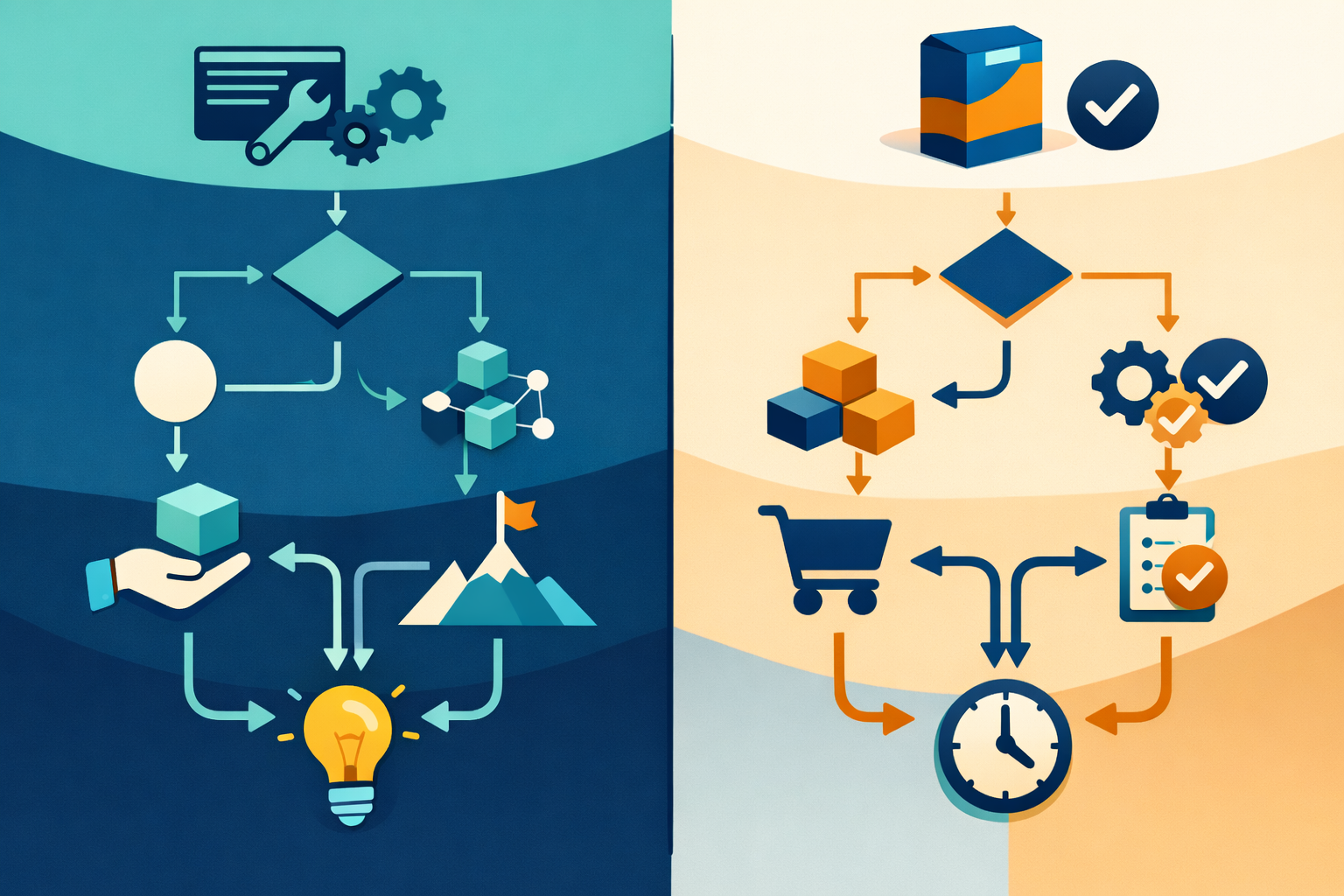
Choosing between custom vs off-the-shelf systems is one of the most important technology decisions organizations make. This choice affects operational efficiency, cost control, scalability, security, and long-term competitiveness. Yet many businesses approach it reactively—driven by urgency, vendor influence, or short-term budget pressure rather than a structured decision framework.
Understanding Custom vs Off-the-Shelf Systems
Before applying a decision framework, it is essential to understand the two options.
Custom systems are software solutions designed and built specifically for an organization’s unique requirements. They are tailored to exact workflows, integrations, and business rules.
Off-the-shelf systems are prebuilt commercial or SaaS solutions designed to serve a broad market. They typically offer standardized features, regular updates, and vendor support.
The right choice depends on context—not preference.
Why a Decision Framework Matters?
A structured decision framework helps organizations evaluate custom vs off-the-shelf systems, comparing factors like cost, flexibility, scalability, and deployment speed — similar to guidance provided in industry resources such as the Splunk build vs buy software guide.
Without a structured framework, custom vs off-the-shelf system decisions often lead to:
- Overbuilt solutions that exceed real needs
- Expensive licensing and long-term vendor lock-in
- Poor adoption due to misaligned workflows
- Technical debt and scalability limitations
A decision framework ensures choices are objective, repeatable, and aligned with business priorities, rather than driven by assumptions or trends.
Key Factors in Custom vs Off-the-Shelf System Decisions
1. Strategic Role of the System
Start by asking: Is this system a competitive differentiator or a support function?
- Custom systems are best when the software enables proprietary processes or unique customer value.
- Off-the-shelf systems are ideal for standardized functions such as payroll, accounting, or basic HR management.
If the system defines how your organization competes, customization may be justified.
2. Business Process Complexity
Evaluate how closely your workflows align with industry norms.
- Choose custom systems if your processes are complex, highly specialized, or frequently changing.
- Choose off-the-shelf systems if your workflows follow common best practices.
Forcing unique processes into rigid software often results in inefficiencies and user frustration.
3. Total Cost of Ownership (TCO)
Upfront cost alone is misleading. Effective custom vs off-the-shelf system decisions assess total cost of ownership over three to five years, including:
- Development or licensing fees
- Implementation and configuration
- Training and onboarding
- Maintenance, upgrades, and support
- Infrastructure and security costs
Custom systems usually involve higher initial investment but lower recurring fees. Off-the-shelf systems often appear cheaper initially but accumulate subscription and customization costs over time.
4. Time to Deployment
Speed matters in many business environments.
- Off-the-shelf systems offer faster deployment and immediate functionality.
- Custom systems require longer development cycles but deliver tailored results.
If rapid deployment is critical to capturing opportunity or meeting compliance deadlines, off-the-shelf systems often provide a clear advantage.
5. Scalability and Future Growth
Consider how the system must evolve as the organization grows.
- Will user volume increase significantly?
- Will new integrations be required?
- Will regulatory or geographic expansion occur?
Custom systems offer flexibility to scale on your terms, while off-the-shelf systems scale based on vendor roadmaps and pricing tiers.
6. Integration with Existing Systems
Most organizations operate within complex technology ecosystems.
- Custom systems can be designed to integrate seamlessly with legacy platforms.
- Off-the-shelf systems may offer limited or costly integration options.
Poor integration increases manual work, data inconsistency, and operational risk.
7. Internal Capabilities and Governance
A realistic assessment of internal resources is essential.
- Custom systems require ongoing access to skilled developers, architects, and product managers.
- Off-the-shelf systems rely more on vendor support and internal administrators.
If software development is not a core capability, maintaining a custom system may introduce long-term risk.
A Step-by-Step Decision Framework
Step 1: Define Business Objectives
Clearly state what the system must achieve. Objectives should be measurable and directly tied to business outcomes such as cost reduction, efficiency, compliance, or customer experience.
Step 2: Classify the System’s Importance
Determine whether the system is:
- Core and differentiating
- Mission-critical but standardized
- Supportive and administrative
This classification often indicates whether custom or off-the-shelf systems are more appropriate.
Step 3: Map Functional Requirements
Document required features and distinguish between:
- Must-have capabilities
- Nice-to-have features
- Future enhancements
This prevents overengineering and scope creep.
Step 4: Compare Cost Scenarios
Model costs for both options over a multi-year horizon. Include conservative assumptions for maintenance, upgrades, and staffing.
Step 5: Assess Risk and Dependency
Evaluate:
- Vendor lock-in risk
- Knowledge concentration risk
- Security and compliance exposure
Balanced custom vs off-the-shelf system decisions consider operational resilience, not just functionality.
Step 6: Validate with Stakeholders
Engage business users, IT teams, and leadership early. Adoption and alignment are just as important as technical fit.
Common Mistakes to Avoid
- Building custom systems without long-term funding commitment
- Buying off-the-shelf systems that require excessive customization
- Ignoring change management and user training
- Underestimating post-implementation support needs
Avoiding these mistakes significantly improves project success rates.
When Hybrid Approaches Work Best
Many organizations succeed with hybrid models, such as:
- Off-the-shelf core platforms with custom extensions
- Custom integration layers connecting multiple commercial tools
This approach balances speed, flexibility, and cost control while reducing risk.
Governance and Continuous Review
Custom vs off-the-shelf system decisions should be revisited periodically. Business needs, technology options, and market conditions evolve.
Establish governance practices to:
- Review system performance regularly
- Monitor vendor reliability
- Assess technical debt and scalability
Continuous evaluation ensures long-term alignment and value.
Conclusion
Choosing between custom vs off-the-shelf systems is not a one-size-fits-all decision. It requires a structured decision framework that evaluates strategic importance, cost, scalability, risk, and organizational capability.
By applying a disciplined, objective approach, organizations can avoid costly missteps and invest in systems that support sustainable growth and operational excellence. When guided by a clear framework, technology decisions become a strategic advantage—not a liability.