


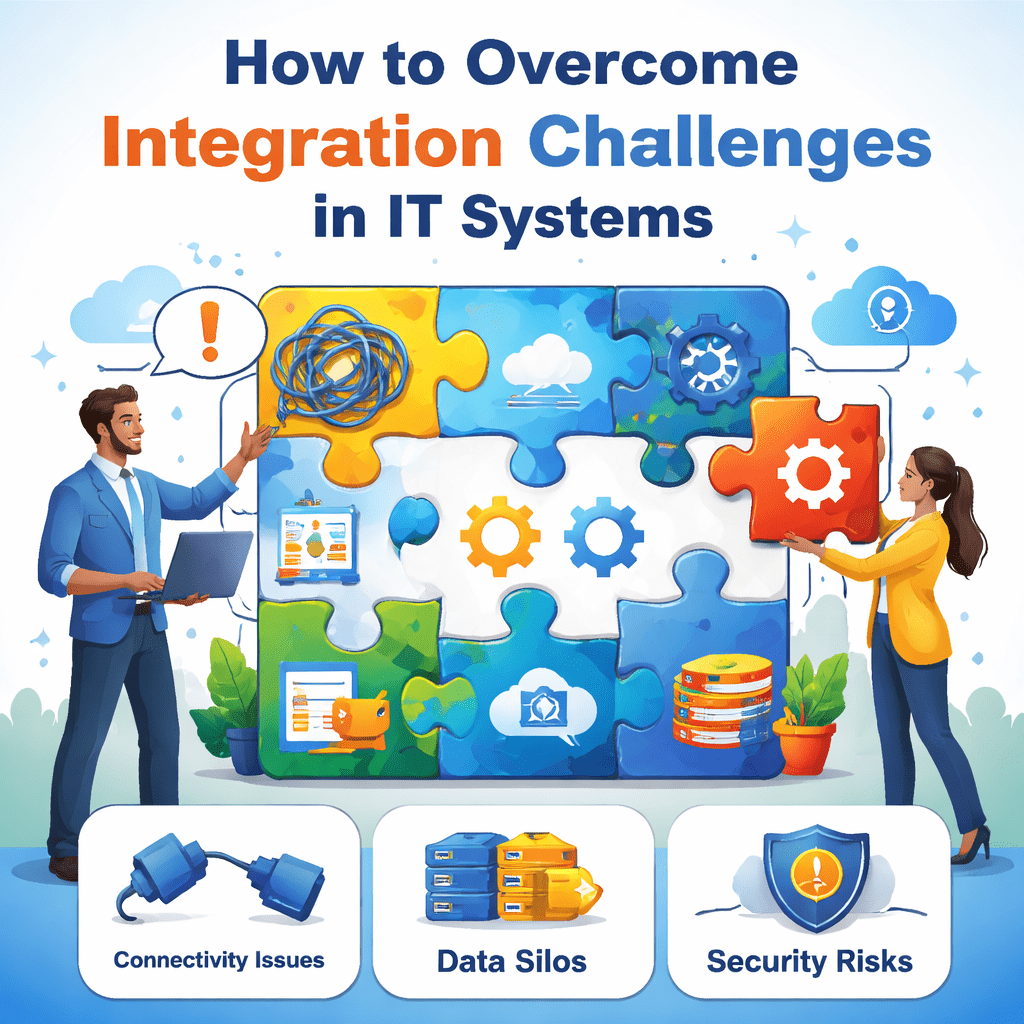
Integration challenges are among the most complex and persistent problems in modern IT environments. As organizations adopt multiple platforms, cloud services, third-party applications, and internal systems, the ability to integrate these components reliably becomes a critical success factor. When integrations fail or perform poorly, the result is fragmented data, broken workflows, operational delays, and increased support costs.
This guide explores the most common integration challenges and provides structured, professional strategies for troubleshooting and problem solving across enterprise systems.
Understanding Integration in Modern Systems
System integration refers to the process of connecting different software applications, services, databases, and technologies so they can exchange data and operate as a unified environment. Integration enables automation, real-time reporting, and seamless user experiences.
However, modern integration landscapes are highly complex due to:
- Hybrid architectures (on-premise and cloud)
- Microservices and APIs
- Legacy systems
- Rapid software updates
- Vendor-specific protocols
These factors make integration both essential and difficult to manage effectively.
Data Incompatibility and Format Mismatches
One of the most common integration challenges is data incompatibility. Systems often use different data structures, formats, and validation rules.
For more examples of common integration issues and solutions, see this guide on common integration issues and solutions.
Typical Causes:
- Inconsistent field naming conventions
- Different data types (string vs integer, date formats, currencies)
- Missing or null values
- Encoding conflicts
Symptoms:
- Failed data transfers
- Corrupted records
- Incomplete transactions
- Synchronization errors
Troubleshooting Approach:
Begin by reviewing data schemas and mapping rules. Validate that both systems interpret data consistently and that transformation logic is correct.
Solutions include:
- Implementing data transformation layers
- Using middleware or ETL tools
- Standardizing data formats
- Applying strict validation rules
Data issues are responsible for a large percentage of integration failures and should be addressed early in system design.
API Limitations and Communication Failures
APIs are the backbone of modern system integration, but they also introduce significant challenges.
Typical Causes:
- Rate limits
- Authentication failures
- Incompatible API versions
- Network interruptions
- Poor error handling
Symptoms:
- Intermittent failures
- Timeout errors
- Unauthorized access messages
- Partial data retrieval
Troubleshooting Approach:
Inspect API logs and response codes. Verify authentication credentials and ensure API versions match system expectations.
Resolution strategies include:
- Implementing retry mechanisms
- Handling rate limits gracefully
- Monitoring API health
- Using version control strategies
Well-designed APIs should fail predictably and provide clear error messages.
Legacy System Constraints
Legacy systems often lack modern integration capabilities, making them a major source of integration challenges.
Typical Causes:
- Proprietary protocols
- Limited documentation
- Outdated architectures
- Inflexible data models
Symptoms:
- Manual workarounds
- Batch processing delays
- Limited automation
- High maintenance costs
Troubleshooting Approach:
Assess whether legacy systems can be enhanced through adapters, wrappers, or integration platforms.
Possible solutions:
- Middleware integration layers
- Data replication strategies
- Gradual system modernization
- API gateways
Legacy integration should be approached strategically, balancing technical feasibility and business value.
Security and Access Control Issues
Security constraints frequently disrupt integrations, especially in regulated environments.
Typical Causes:
- Misconfigured authentication
- Insufficient permissions
- Token expiration
- Firewall restrictions
- Certificate errors
Symptoms:
- Unauthorized errors
- Blocked requests
- Data access failures
- Inconsistent behavior across environments
Troubleshooting Approach:
Review identity management configurations and verify access policies.
Resolution strategies include:
- Centralized identity management
- Role-based access controls
- Secure token handling
- Certificate lifecycle management
Security should be embedded into integration design, not added as an afterthought.
Performance and Scalability Problems
Even when integrations function correctly, performance bottlenecks can render them ineffective.
Typical Causes:
- High transaction volumes
- Synchronous processing
- Inefficient queries
- Network latency
- Limited infrastructure capacity
Symptoms:
- Slow response times
- Backlogged message queues
- System timeouts
- User dissatisfaction
Troubleshooting Approach:
Monitor throughput, latency, and system load. Identify which component introduces delays.
Solutions include:
- Asynchronous messaging
- Load balancing
- Caching mechanisms
- Horizontal scaling
- Performance optimization
Scalability should be considered from the initial integration design stage.
Error Handling and Monitoring Gaps
Poor error handling makes troubleshooting significantly more difficult.
Typical Causes:
- Inadequate logging
- Generic error messages
- Lack of alerting
- Silent failures
Symptoms:
- Undetected data loss
- Delayed issue resolution
- Incomplete troubleshooting
- Poor system visibility
Troubleshooting Approach:
Implement centralized logging and monitoring solutions that track integration activity.
Key improvements:
- Structured logging formats
- Real-time alerts
- Transaction tracing
- Error categorization
Visibility is essential for diagnosing integration problems quickly and accurately.
Change Management and Version Conflicts
Frequent system updates often break existing integrations.
Typical Causes:
- API changes
- Database schema modifications
- Deprecated features
- Uncoordinated releases
Symptoms:
- Sudden integration failures
- Inconsistent data
- Compatibility errors
- Increased incident rates
Troubleshooting Approach:
Establish formal change management procedures and testing environments.
Solutions include:
- Version control policies
- Automated integration testing
- Backward compatibility strategies
- Release coordination
Unmanaged changes are one of the most common root causes of integration disruptions.
Human and Organizational Factors
Not all integration challenges are technical. Organizational issues also play a major role.
Typical Causes:
- Poor documentation
- Lack of ownership
- Inadequate training
- Communication gaps
- Misaligned priorities
Symptoms:
- Delayed projects
- Repeated mistakes
- Knowledge silos
- Inefficient troubleshooting
Troubleshooting Approach:
Clarify roles and responsibilities. Improve documentation and encourage cross-team collaboration.
Organizational maturity significantly influences integration success.
A Structured Troubleshooting Framework for Integration
Effective problem solving requires a consistent methodology.
Step 1: Define the Integration Scope
Identify all systems, data flows, and dependencies.
Step 2: Reproduce the Issue
Determine whether the problem is consistent or intermittent.
Step 3: Collect Evidence
Analyze logs, metrics, and error messages.
Step 4: Isolate the Root Cause
Test individual components independently.
Step 5: Implement Controlled Fixes
Apply changes in staging before production.
Step 6: Monitor and Document
Ensure long-term stability and capture lessons learned.
This framework reduces guesswork and improves resolution speed.
Best Practices to Prevent Integration Challenges
Prevention delivers the highest return on investment.
Key best practices include:
- Using standardized integration platforms
- Designing APIs with backward compatibility
- Implementing strong monitoring systems
- Maintaining clear documentation
- Performing regular integration audits
- Investing in team training
Organizations that treat integration as a strategic capability experience lower costs, higher reliability, and better system agility.
Conclusion
Integration challenges are inevitable in complex digital ecosystems, but they are not insurmountable. Most failures stem from predictable causes such as data mismatches, API limitations, security misconfigurations, performance constraints, and poor change management.
By applying structured troubleshooting methods and proactive system design principles, organizations can transform integration from a recurring problem into a competitive advantage. In modern enterprises, effective integration is not just a technical requirement—it is a foundation for scalability, innovation, and long-term operational success.