




Every year a few clients ask me the same question about reshoring manufacturing, usually over coffee after the slides are closed: “Should we bring it back?” The “it” changes. One year it’s castings, the next it’s printed circuit board assemblies, then injection molded housings. The question underneath never changes, though. Leadership teams want to know whether reshoring manufacturing is a smart strategic move or an expensive way to feel safer.
I have spent most of my career on factory floors, in supplier audits, and in the long, awkward meetings where finance and operations try to agree on what something really costs. My honest answer is that reshoring can be one of the best decisions a company makes, and it can also be one of the most painful. Which way it goes depends almost entirely on how well the decision is framed before anyone signs a lease.
This article is my attempt to set out that framing. It covers what the latest data says, where nearshoring fits, the cost math most companies get wrong, and the practical sequence I walk clients through when they’re seriously thinking about moving production closer to home.
Why Reshoring Manufacturing Is Back on the Agenda
The pandemic gave the shock and the tariffs kept it going, but neither one fully explains the momentum. Over the last few years, companies learned something they had been able to ignore for two decades. A supply chain built purely on unit price is fragile in ways that never appear on a purchase order.
I watched a client in industrial pumps lose almost a full quarter of revenue because one sealed bearing, a part worth a few dollars, was stuck on a vessel waiting outside a congested port. The bearing was cheap. The idle assembly line, the expedited air freight, and the angry distributors were not. That is the lesson that has kept reshoring on board agendas.
The numbers back up that shift in thinking. According to the Reshoring Initiative 2025 Annual Report, U.S. manufacturers and foreign investors announced 247,000 manufacturing jobs through reshoring and foreign direct investment in 2025. Based on first half announcements, the group projects about 309,000 jobs for 2026, which would be roughly 25 percent more than the prior year.
Those are encouraging figures. They’re also only part of the picture, and this is where I think a lot of public commentary goes wrong.
The Gap Between Reshoring Announcements and Manufacturing Reality
Here is the uncomfortable part. Announcements and actual production are two very different things.
The Kearney 2026 Reshoring Index, now in its 13th edition, measures the year over year change in the U.S. manufacturing import ratio. In plain terms, it compares imports from Asian low cost countries against domestic manufacturing output. The 2026 reading improved from negative 115 to negative 91. That’s progress, but it’s still negative, which means the country is still net offshoring by that measure. The report’s own title notes that U.S. manufacturing imports hit a four year high despite record investment and tariffs.
Why Flexibility Is Beating Full Reshoring of Manufacturing
Patrick Van den Bossche, the Kearney partner who led the report, made a point in an Assembly Magazine interview that matches what I see in client work. Companies are not rushing to rebuild everything in the United States. They are building flexibility. Much of the production leaving China is going to Vietnam, Mexico, India, and other places rather than coming back to an American plant.
The Reshoring Initiative’s own records show the lag too. Its 2024 annual report noted that while far more jobs had been announced, about 1.7 million had actually been filled since 2010. Some projects get delayed, some get scaled down, and some quietly disappear when the policy winds change.
I don’t share these figures to argue against reshoring. I share them because the companies that succeed are the ones that treat the decision as an engineering and finance problem, not a press release.
Reshoring, Nearshoring, and Friendshoring: Getting the Terms Right
People use these words interchangeably, and that causes real confusion in strategy sessions. Here is how I define them with clients.
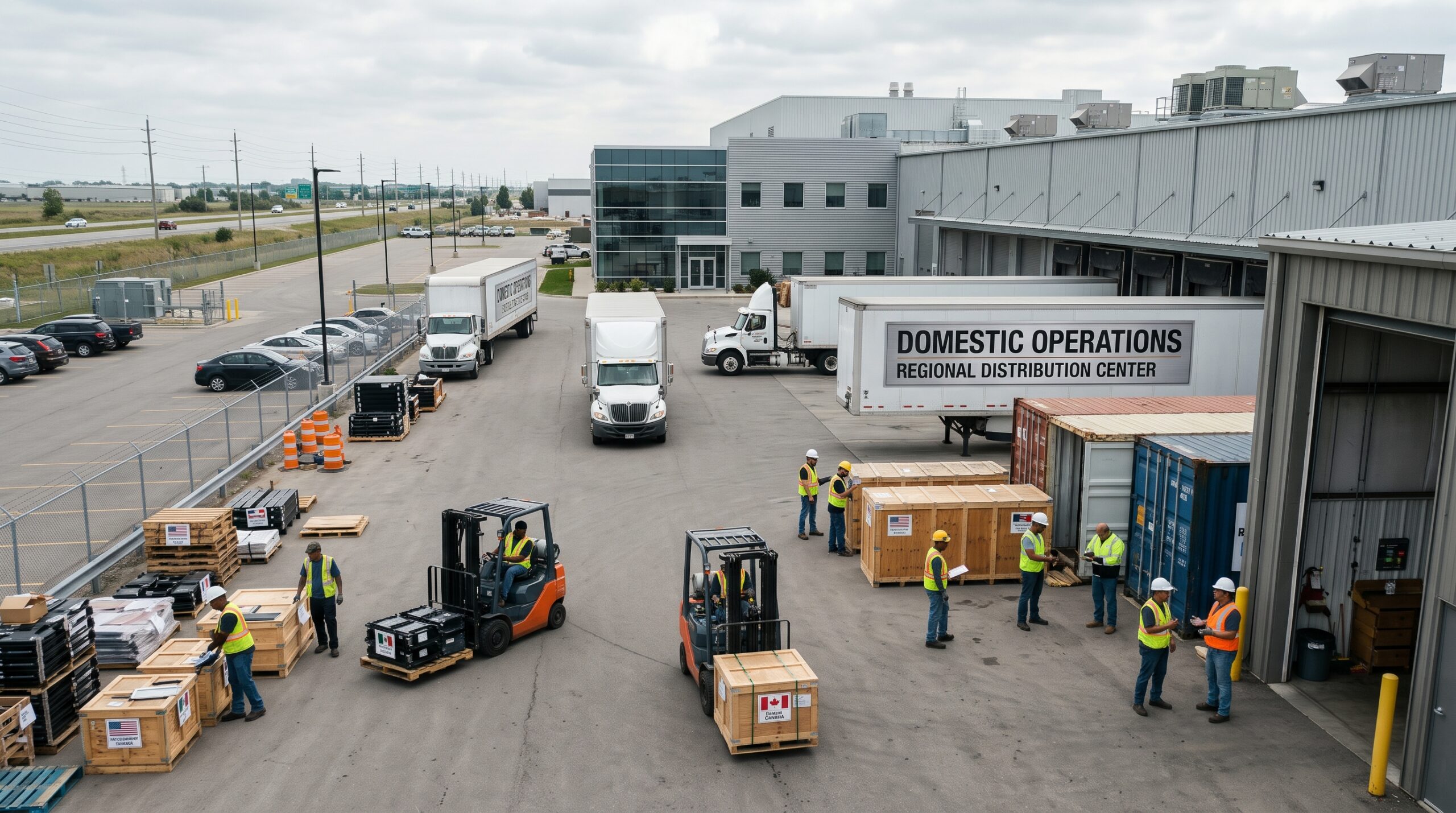
Reshoring means moving production back to your home country. For a U.S. company, that means building or buying capacity in the United States, or moving work to a domestic contract manufacturer.
Nearshoring means moving production to a nearby country, usually one with shorter transit times, overlapping time zones, and favorable trade terms. For North American companies, that mostly means Mexico and, to a lesser extent, Canada and parts of Central America.
Friendshoring means sourcing from countries considered politically aligned and lower risk, even if they’re not geographically close.
In practice, the best strategies blend all three. A client of mine in commercial HVAC components now does final assembly and configuration in Tennessee, machined subcomponents in Monterrey, and electronics in Malaysia, with a second qualified supplier in Mexico. That isn’t a retreat from global sourcing. It’s a portfolio built to absorb shocks.
The Real Drivers Behind Reshoring Manufacturing
When I interview executive teams, the reasons they give for considering reshoring manufacturing usually fall into five buckets.
1. Resilience and Lead Time
Long ocean supply chains carry long, variable lead times. Variability is the silent killer. A 10 week lead time you can trust is manageable. A lead time that swings between six and 16 weeks forces you to carry huge safety stock, which ties up cash and warehouse space and makes inventory management for manufacturers far harder than it needs to be.
2. Tariffs and Trade Policy
Tariffs have clearly changed sourcing patterns. But they’re a weak foundation for a 20 year capital decision because they can shift with one election or one negotiation. The Trade and Industry Development summary of the Reshoring Initiative’s data points out that in 2025, tariffs and freight savings led OEM decision making, but geopolitical risk has now caught up as a driver. That shift matters. Geopolitical risk is a more durable reason to restructure than a tariff schedule, and it belongs in any industrial procurement strategy for price shocks.
3. Total Cost, Not Unit Price
This is the biggest one, and I’ll dig into it below.
4. Speed to Market and Engineering Collaboration
When your design engineers can drive two hours to the plant instead of flying 14, problems get solved in days instead of months. For products with frequent engineering change management needs, this alone can justify a closer footprint.
5. Customer and Regulatory Pressure
Defense, aerospace, medical devices, and infrastructure customers increasingly ask for domestic content or traceable supply chains. If your customers write it into their contracts, the decision gets made for you.
The Cost Math Most Companies Get Wrong About Reshoring Manufacturing
I’ve reviewed dozens of sourcing decisions where the offshore option “won” because someone compared a landed piece price to a domestic quote and stopped there. That comparison is almost always misleading, and it’s the most common reason reshoring manufacturing gets dismissed too early.
A proper total cost of ownership analysis includes, at minimum:
- Piece price
- Ocean or air freight, including the cost of expediting when things go wrong
- Duties and tariffs, plus the cost of managing compliance
- Inventory carrying cost for the extra weeks of pipeline and safety stock
- Quality costs, including inspection, rework, returns, and warranty claims (a strong manufacturing quality control process makes these visible)
- Travel and supplier management overhead
- Intellectual property risk
- The cost of a disruption, weighted by how likely it is
- Payment terms and currency exposure
When you load all of that in, a 25 percent price gap often shrinks to single digits, and sometimes flips entirely. That’s why I treat this analysis as part of any serious set of manufacturing cost reduction strategies, not a separate exercise.
More Companies Are Doing the Math Properly
The good news is that more companies are doing this work. According to the Reshoring Initiative findings reported by Trade and Industry Development, 40 percent of OEMs now use total cost of ownership to compare offshore and domestic options, up from 30 percent in 2025. The Reshoring Initiative also offers a free Total Cost of Ownership Estimator that I recommend to clients as a starting point before they bring in a full modeling team.
There’s a caution in the same data. OEM satisfaction with reshoring results dropped to 67 percent in 2026, down from 96 percent in 2025. In my experience, dissatisfaction usually traces back to two causes. Either the business case was built on optimistic labor and productivity assumptions, or the company underestimated how long it takes to ramp a new plant to stable yield.
The Workforce Problem Facing Reshoring Manufacturing
If there’s a single factor that decides whether reshoring manufacturing succeeds, it’s people.
A study by Deloitte and The Manufacturing Institute projected that U.S. manufacturing could need as many as 3.8 million new employees between 2024 and 2033. It also found that 1.9 million of those jobs could go unfilled if skills and applicant gaps are not addressed. Manufacturing Dive’s coverage of the same research highlighted how much employer flexibility now matters for keeping workers.
Start Site Selection With a Labor Study
I tell clients to start the site selection process with a labor study, not a real estate search. Before you look at a single building, you should know:
- How many qualified machinists, maintenance technicians, and electricians live within a 45 minute commute
- Which community and technical colleges nearby run programs you can partner with
- What competing employers are paying and how fast wages are rising
- Whether the local workforce board will support apprenticeships and training grants
One client chose a site in the Carolinas largely because a nearby technical college agreed to build a custom CNC curriculum around their equipment. That partnership cut their ramp time by several months. Another client chose a cheaper site with weaker labor depth and spent two years fighting turnover. Investing early in manufacturing workforce training is usually what separates those two outcomes.
How Automation Makes Reshoring Manufacturing Possible
The reason reshoring manufacturing is even possible at scale is that labor content in many products has dropped sharply. Collaborative robots, automated inspection, machine tending cells, and better scheduling software mean a modern plant needs fewer people per unit of output than it did 15 years ago.
That said, automation is not a magic fix for a labor shortage. Automated plants need skilled technicians to keep the equipment running, engineers to program it, and operators who understand what the machines are doing. You trade a large pool of entry level workers for a smaller pool of highly skilled ones, and those people are harder to find.
My rule of thumb is to design the automation strategy and the workforce strategy together. If you buy the robots first and figure out who maintains them later, you’ll be calling the integrator for every breakdown. A realistic manufacturing automation ROI calculation should include those support roles from day one.
Nearshoring to Mexico: The Opportunity and the Fine Print
For many North American companies, Mexico is the most practical middle ground. You get shorter transit, a large manufacturing base, deep automotive and electronics clusters, and trade access under the USMCA.
What the 2026 USMCA Review Changed
But 2026 has been a year of real uncertainty. The United States, Mexico, and Canada held the first joint review of the USMCA on July 1, 2026. TrendForce reports that bilateral talks between the U.S. and Mexico have continued since, focused on autos, steel and aluminum, and economic security. Nearshoring investment has turned more cautious as a result.
A big part of the debate is Chinese investment in Mexico. FreightWaves has reported that a surge in Chinese backed manufacturing there is drawing scrutiny as U.S. officials push to close what they see as trade loopholes. It also reported that tariffs on autos and steel are likely to remain even after renegotiation. QIMA’s analysis lists several fronts open at once, including rules of origin, regional content, Section 232 tariffs, and export controls.
How to Nearshore Without Compliance Surprises
What does that mean in practice? If you’re nearshoring to Mexico, I advise clients to:
- Map content origin down to tier two and tier three. If your Mexican supplier relies heavily on Chinese inputs, your “nearshored” product may not qualify for the treatment you expect.
- Build rules of origin compliance into supplier contracts. Make suppliers responsible for documentation, and audit it.
- Model multiple trade scenarios. Run your business case under at least three outcomes: status quo, tighter content rules, and higher tariffs on non qualifying goods.
- Look past the border cities. Industrial parks in Monterrey, Saltillo, and Ciudad Juárez are crowded, and power and water constraints are real. The Bajío region and parts of central Mexico can offer better availability, though logistics take more planning. Revisit your logistics network optimization model before you commit to an interior site.
Nearshoring still makes a great deal of sense for many companies. It just needs to be done with clear eyes about compliance.
A Practical Framework for Reshoring Manufacturing Decisions
When a client asks whether they should reshore, I don’t answer with a yes or no. I run them through a sequence. It takes anywhere from six to 12 weeks for a midsized manufacturer, and it saves a lot of regret.
Step 1: Segment Your Product Portfolio
Not every part belongs in the same place. Sort your SKUs by volume, variability, engineering change frequency, weight and size, labor content, and strategic importance. High mix, low volume parts with frequent changes are often the best candidates to bring home. Stable, high volume, labor heavy commodities may still belong offshore or nearshore.
Step 2: Build a True Total Cost Model
Use the cost elements listed above. Have finance and operations build it together so both sides trust the output. Include a disruption cost estimate, even if it’s rough. A rough number is better than pretending the risk is zero.
Step 3: Stress Test the Supply Chain
Ask what happens if a key port closes for three weeks, if a supplier fails a quality audit, or if a tariff doubles. Look at which products and customers would be hit hardest. A structured supply chain risk assessment often surfaces the parts that most need a closer source.
Step 4: Evaluate Make Versus Buy at Home
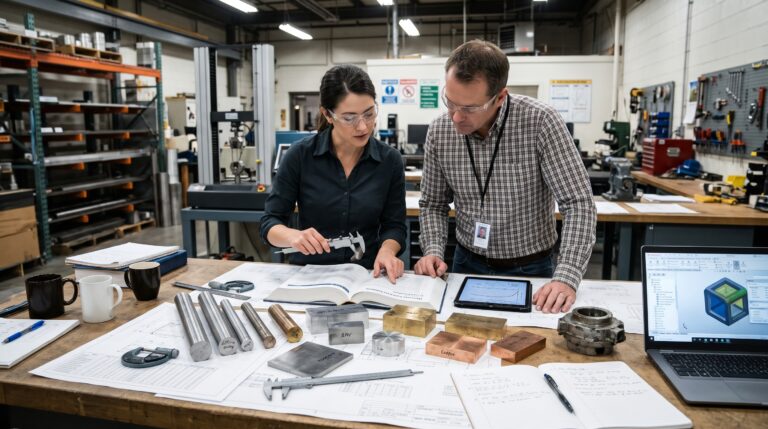
Reshoring doesn’t always mean building your own plant. Domestic contract manufacturers, machine shops, and fabricators often have capacity and can move faster than a new facility. Supplier development, where you help a domestic shop grow into your needs, is one of the most underused tools I see. A disciplined supplier qualification process makes that path far less risky. If you do build, get the manufacturing plant layout design right before the equipment arrives.
Step 5: Run a Pilot Before You Commit Capital
Move one product family first. Measure real yields, real labor productivity, and real lead times. Use what you learn to correct the business case before you scale. For larger moves, a formal engineering feasibility study gives the pilot results a structure leadership can act on.
Step 6: Plan the Transition Carefully
Build a bridge inventory before you switch. Keep the offshore supplier qualified until the new source proves itself, ideally through a clean first article inspection and stable production runs. Many reshoring stories go sideways because the old supplier was cut off too early.
Step 7: Lock In the Workforce Plan
Line up training partners, apprenticeships, and hiring pipelines at least six months ahead of start of production.
Common Reshoring Manufacturing Mistakes I See Over and Over
After enough of these projects, patterns emerge. Here are the ones I warn every client about.
Treating tariffs as permanent. Policy changes. Build your case on durable factors like total cost, lead time, and risk, and treat tariff relief as a bonus.
Underestimating ramp time. A new plant rarely hits target yields in year one. Plan for a learning curve and budget for it.
Ignoring the supplier base. Your final assembly might come home, but if every subcomponent still crosses an ocean, you’ve only moved the risk around. Map the full bill of materials.
Forgetting about tooling and IP transfer. Getting tooling, drawings, and process knowledge back from an offshore supplier can be slow and contentious. Start that conversation early and handle it professionally.
Making it a political decision instead of a business one. I understand the appeal of a “made at home” story. But the plant still has to be profitable. Customers will not pay a premium forever just for origin.
The Outlook for Reshoring Manufacturing Over the Next Few Years
I’m cautious about predictions, but a few things seem likely based on the data and what I see with clients.
First, the shift will be gradual rather than dramatic. The Kearney index suggests that real import substitution takes years, not quarters. Companies are diversifying first and reshoring selectively.
Second, regional manufacturing will grow. North America, Europe, and Asia are each building more self contained supply networks. Companies will increasingly make products in the region where they sell them.
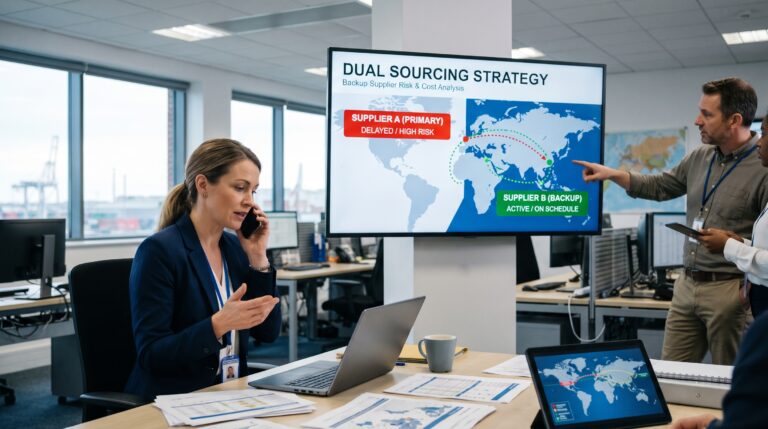
Third, the winners will be the companies that build flexibility into their networks. That means a sound dual sourcing strategy, qualified backup suppliers, modular production lines, and digital planning tools that let them shift volume quickly.
Fourth, workforce development will become a competitive advantage. The companies that invest in training, apprenticeships, and retention will be the ones that can actually staff the plants they announce.
Final Thoughts on Reshoring Manufacturing
Reshoring manufacturing isn’t a trend to follow or a slogan to adopt. It’s a set of hard decisions about where value gets created in your business, and what risks you’re willing to carry.
The companies I’ve seen do it well share a few habits. They start with data rather than headlines. Total cost gets modeled honestly, not optimistically. Nearshoring and reshoring are treated as tools rather than identities. People come before buildings in their investment plans. And these teams are patient enough to pilot, learn, and adjust.
If you’re sitting in that boardroom asking “should we bring it back,” my advice is simple. Ask a better question first: which parts of our supply chain, if they broke tomorrow, would hurt us most, and what would it truly cost to protect them? Answer that well, and the reshoring decision usually becomes much clearer.
Frequently Asked Questions
What is reshoring manufacturing?
Reshoring manufacturing is the process of moving production that had been offshored back to a company’s home country. The Reshoring Initiative tracks reshoring and foreign direct investment announcements in the United States and publishes annual data on the trend.
What is the difference between reshoring and nearshoring?
Reshoring brings production back home, while nearshoring moves it to a nearby country such as Mexico. Kearney’s Reshoring Index covers both and tracks how U.S. sourcing is shifting away from Asian low cost countries.
Is reshoring actually happening in the United States?
Yes, but more slowly than headlines suggest. The Reshoring Initiative 2025 Annual Report recorded 247,000 announced jobs in 2025, while Kearney’s 2026 index stayed in negative territory, showing that imports still outpace domestic output.
Why are companies nearshoring to Mexico?
Mexico offers shorter transit times, established manufacturing clusters, and USMCA trade access. However, the 2026 USMCA review has added uncertainty around rules of origin and tariffs, as TrendForce and FreightWaves have reported.
What is the biggest challenge in reshoring manufacturing?
Workforce availability. Deloitte and The Manufacturing Institute estimate that 1.9 million manufacturing jobs could go unfilled through 2033 without stronger training and recruitment.
How do I know if reshoring makes financial sense for my company?
Start with a total cost of ownership analysis instead of comparing piece prices. The Reshoring Initiative’s findings show more OEMs are now using this method to compare offshore and domestic options.
Are tariffs a good reason to reshore?
Tariffs can tip the math, but they can change quickly. As Kearney’s Patrick Van den Bossche explained, many companies are responding to tariffs by building flexibility rather than committing fully to domestic production.
References
- Kearney. 2026 Reshoring Index: Why US Manufacturing Imports Hit a Four Year High Despite Record Investment and Tariffs
- Manufacturing.net. Reshoring, Foreign Direct Investment Accounted for 247,000 U.S. Manufacturing Jobs in 2025
- Trade and Industry Development. The Next Wave of Reshoring
- Automation.com. Reshoring Initiative 2024 Annual Report: 244,000 U.S. Manufacturing Jobs Announced
- Assembly Magazine. Why Manufacturers Are Choosing Flexibility Instead of Reshoring
- Deloitte. US Manufacturing Could Need as Many as 3.8 Million New Employees by 2033
- Manufacturing Dive. Manufacturing Labor Shortage Through 2033: Deloitte and MI Report
- TrendForce. USMCA Enters Annual Review as Nearshoring Investment Turns More Cautious
- FreightWaves. USMCA Review Tests China’s Role in Mexico Supply Chains
- QIMA. USMCA 2026 Review: Scenarios and How to Prepare Your Supply Chain
- Reshoring Initiative. Reshoring Data, Resources, and Total Cost of Ownership Estimator