


In today’s digital world, speed matters more than ever. Whether you’re streaming a movie, using a navigation app, making an online purchase, monitoring industrial equipment, or connecting smart devices in your home, you expect everything to work instantly. Most people don’t think about what happens behind the scenes when they tap a screen, click a button, or ask a voice assistant a question. However, every action generates data, and that data must be processed somewhere before a response can be delivered.
For years, cloud computing has been the primary solution for handling this growing flood of information. Businesses and consumers alike have benefited from powerful cloud platforms capable of storing vast amounts of data and running sophisticated applications. Yet as the number of connected devices continues to explode, organizations are discovering that relying solely on centralized cloud infrastructure is not always enough.
This challenge has given rise to one of the most important developments in modern IT architecture: edge computing.
As an IT Engineer, I’ve seen firsthand how technology continues to move toward faster, smarter, and more efficient systems. Edge computing is a perfect example of this evolution. Instead of sending every piece of data to a distant cloud server for processing, edge computing brings computing power closer to where the data is actually created. This simple but powerful concept is transforming industries, improving user experiences, and helping organizations respond to information in real time.
Understanding edge computing basics is becoming increasingly important because the technology is no longer limited to large enterprises or highly specialized environments. It is already influencing how businesses operate, how cities function, and how consumers interact with everyday technology.
What Is Edge Computing?
Edge computing is a distributed computing model that processes data closer to its source rather than sending all information to a centralized data center or cloud environment for analysis.
To understand this concept, imagine a busy restaurant. If every order from every customer had to be sent to a kitchen located hundreds of miles away before being prepared and returned, service would be painfully slow. Customers would become frustrated, and operations would quickly become inefficient.
Now imagine the restaurant has its own kitchen on-site. Orders can be prepared immediately, reducing wait times and improving customer satisfaction.
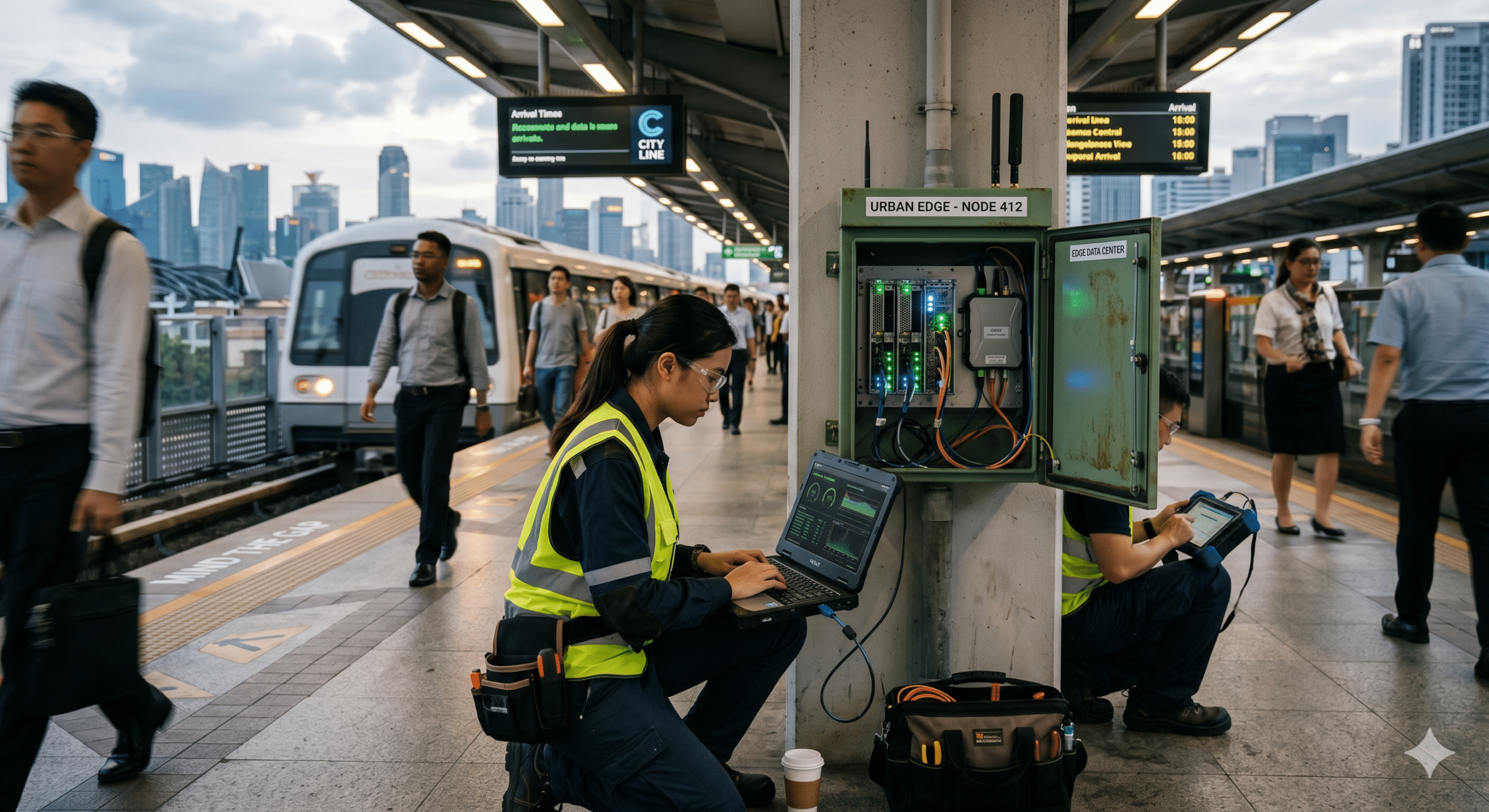
Edge computing works in a very similar way. Instead of transmitting data across long distances to centralized cloud servers, processing occurs at or near the location where the data is generated. This could be a local server, a network gateway, a telecommunications tower, a smart device, or another nearby computing resource.
The term “edge” refers to the edge of the network, which is the point closest to users, devices, sensors, machines, or applications generating information.
By moving processing closer to the source, organizations can dramatically improve speed, efficiency, and reliability.
Why Traditional Cloud Computing Isn’t Always Enough
Cloud computing remains one of the most transformative technologies of the past two decades. It offers scalability, flexibility, centralized management, and cost-effective infrastructure. Businesses can deploy applications globally without investing heavily in physical hardware.
However, modern technology environments are generating unprecedented volumes of data.
Consider the number of connected devices that exist today. Smartphones, security cameras, smart appliances, wearable devices, industrial sensors, connected vehicles, and medical equipment continuously create information. Many of these devices generate data every second.
Sending all of this information to distant cloud servers creates several challenges.
The first challenge is latency. Latency refers to the time it takes for data to travel from its source to a processing system and back again. Even small delays can create significant problems in applications requiring real-time responses.
Imagine an autonomous vehicle approaching an unexpected obstacle on the road. The vehicle cannot afford to wait several seconds for instructions from a cloud server located hundreds or thousands of miles away. Decisions must happen almost instantly.
Bandwidth consumption presents another challenge. Transmitting massive amounts of data across networks requires significant resources. As data volumes continue growing, network congestion and operational costs can increase substantially.
There are also concerns related to reliability. If internet connectivity becomes unavailable, systems that depend entirely on cloud processing may struggle to function properly.
Edge computing helps solve these challenges by processing information locally whenever possible while still leveraging cloud resources when needed.
How Edge Computing Works
The fundamental principle behind edge computing is relatively straightforward, even though the technology supporting it can be highly sophisticated.
The process begins when a device generates data. This could be a surveillance camera capturing video footage, a manufacturing sensor measuring equipment performance, a wearable health monitor tracking vital signs, or a smart thermostat monitoring room temperature.
Instead of immediately sending all data to a centralized cloud platform, the information is first directed to a nearby edge device or edge server.
This local computing resource analyzes the data and determines whether immediate action is necessary. If a response is required, the edge system can act almost instantly without waiting for cloud communication.
For example, a smart security camera equipped with edge computing capabilities can detect unusual movement and trigger an alert immediately. There is no need to transmit every second of video footage to the cloud before making a decision.
After processing occurs locally, relevant information may still be forwarded to cloud systems for long-term storage, advanced analytics, machine learning training, reporting, or centralized management.
This creates a hybrid approach that combines the speed of local processing with the scalability and power of cloud infrastructure.
Understanding the Architecture Behind Edge Computing
A typical edge computing environment consists of several interconnected components working together.
At the foundation are the devices that generate data. These may include sensors, cameras, industrial equipment, smart vehicles, mobile phones, medical devices, or Internet of Things (IoT) technologies.
Connected to these devices are edge nodes or edge servers. These systems provide local processing capabilities and serve as the primary location where data analysis occurs.
The network infrastructure then facilitates communication between edge devices and cloud resources. Advances in high-speed connectivity, including 5G technology, have significantly improved the effectiveness of edge computing environments.
Finally, cloud platforms remain an important part of the overall architecture. While edge systems handle immediate processing requirements, cloud environments provide centralized oversight, large-scale analytics, data storage, application deployment, and long-term business intelligence.
Rather than competing against each other, cloud computing and edge computing work together to create a more balanced and efficient technology ecosystem.
The Benefits of Edge Computing
The growing adoption of edge computing is driven by several significant advantages that directly impact both business operations and user experiences.
Perhaps the most obvious benefit is reduced latency. Since data is processed closer to where it originates, response times become significantly faster. This is particularly important in applications requiring immediate action, such as autonomous vehicles, industrial automation systems, healthcare monitoring devices, and smart infrastructure.
Another major advantage is improved network efficiency. Organizations can process large amounts of information locally and transmit only essential data to cloud environments. This reduces bandwidth requirements and lowers communication costs.
Reliability also improves considerably. Edge-enabled systems can often continue operating even when cloud connectivity becomes temporarily unavailable. This capability is especially valuable in remote locations, industrial environments, and mission-critical applications.
Security and privacy can benefit as well. Since sensitive information may remain closer to its source, organizations gain greater control over how data is handled and transmitted. While edge computing introduces its own security considerations, minimizing unnecessary data transfers can reduce certain risks.
Scalability represents another important advantage. As businesses deploy more connected devices, distributing workloads across multiple edge locations helps prevent bottlenecks and improves overall system performance.
Together, these benefits explain why edge computing has become a key component of modern digital transformation strategies.
The Relationship Between Edge Computing and IoT
It is impossible to discuss edge computing without mentioning the Internet of Things.
IoT refers to the growing network of connected devices capable of collecting and exchanging information. These devices range from consumer products like smart speakers and fitness trackers to industrial machinery and critical infrastructure systems.
The rapid growth of IoT has created enormous data management challenges.
Imagine a large manufacturing facility containing thousands of sensors monitoring temperature, pressure, vibration, humidity, and equipment performance around the clock. Sending every data point to the cloud would consume significant network resources and potentially introduce processing delays.
Edge computing allows these sensors to analyze information locally and transmit only meaningful insights or alerts.
This approach reduces network congestion while enabling faster responses to changing conditions.
As IoT deployments continue expanding across industries, edge computing will become increasingly essential for managing data efficiently and effectively.
Edge Computing and Artificial Intelligence
Another powerful trend shaping the future of technology is the convergence of edge computing and artificial intelligence.
Artificial intelligence systems traditionally rely on cloud-based infrastructure for training and processing. Massive datasets and computational requirements often make centralized environments necessary during the development phase.
However, once AI models are trained, they can frequently be deployed directly to edge devices.
This creates what is commonly known as Edge AI.
With Edge AI, intelligent decisions can be made locally without requiring constant communication with cloud systems.
For example, a smart traffic camera can analyze vehicle movements in real time, identify accidents, and notify authorities immediately. Similarly, manufacturing equipment can detect anomalies before failures occur, helping organizations avoid costly downtime.
The combination of edge computing and AI enables faster decision-making, improved efficiency, and more responsive applications across countless industries.
Real-World Examples of Edge Computing
Many people are surprised to learn how frequently they already interact with edge computing technologies.
Content delivery networks provide one of the most familiar examples. When you stream a video, download a file, or access a website, content is often delivered from servers located geographically closer to you. This improves loading speeds and reduces delays.
Healthcare organizations use edge computing to monitor patients remotely. Medical devices can continuously analyze vital signs and alert healthcare providers if abnormalities are detected.
Manufacturing companies use edge-enabled systems to monitor equipment performance, improve quality control, and support predictive maintenance programs.
Retailers leverage edge computing to improve inventory management, analyze customer behavior, and create personalized shopping experiences.
Transportation companies use edge technologies to optimize routes, monitor vehicle performance, and enhance safety systems.
Smart cities rely on edge computing for traffic management, public safety monitoring, environmental analysis, and infrastructure optimization.
These examples demonstrate how edge computing is quietly becoming a foundational technology across numerous sectors.
Challenges Associated with Edge Computing
While edge computing offers substantial benefits, organizations must also address several challenges during implementation.
Managing distributed infrastructure can be significantly more complex than managing centralized systems. Instead of overseeing a small number of data centers, IT teams may need to monitor hundreds or even thousands of edge devices deployed across various locations.
Security remains another critical concern. Each edge device represents a potential entry point for cyber threats. Organizations must establish robust security practices, including encryption, authentication, monitoring, and regular software updates.
Hardware limitations can also present challenges. Edge devices typically have fewer computing resources compared to large cloud data centers. Applications must often be optimized to operate efficiently within these constraints.
Interoperability issues may arise when organizations deploy equipment from multiple vendors. Ensuring compatibility across diverse devices and platforms requires careful planning and standardized approaches.
Despite these challenges, advances in automation, orchestration platforms, remote management tools, and cybersecurity technologies continue making edge computing deployments more practical and manageable.
The Future of Edge Computing
The future of edge computing appears exceptionally promising.
Several technological trends are accelerating adoption across industries. The expansion of 5G networks provides faster connectivity and lower latency, making edge deployments even more effective. Artificial intelligence continues moving closer to devices and users. Smart cities are becoming more sophisticated, and industrial automation is becoming increasingly data-driven.
Organizations are also recognizing that not every workload belongs entirely in the cloud.
Instead, the future will likely consist of hybrid architectures that intelligently distribute workloads between edge and cloud environments based on performance requirements, cost considerations, and operational goals.
As connected devices continue multiplying and real-time applications become more common, edge computing will play an increasingly central role in modern IT infrastructure.
Final Thoughts
Edge computing represents one of the most important advancements in today’s technology landscape. While cloud computing transformed the way organizations store and process information, the growing demand for real-time responsiveness has created a need for a more distributed approach.
By bringing computing power closer to where data is generated, edge computing reduces latency, improves efficiency, enhances reliability, and enables faster decision-making. From healthcare and manufacturing to transportation, retail, and smart cities, the technology is already delivering measurable value across countless industries.
As an IT Engineer, I view edge computing not as a replacement for cloud computing but as a natural evolution of modern infrastructure. The most successful organizations in the coming years will be those that understand how to balance cloud and edge resources effectively, creating systems that are both powerful and responsive.
For businesses looking to remain competitive in an increasingly connected world, understanding edge computing basics is no longer optional. It is becoming an essential part of building the next generation of digital experiences.
Frequently Asked Questions (FAQ)
What is edge computing in simple terms?
Edge computing is a method of processing data closer to where it is created instead of sending everything to a centralized cloud server. This helps improve speed and reduce delays.
Why is edge computing important?
Edge computing improves performance, reduces latency, lowers bandwidth usage, and enables real-time decision-making for applications that require immediate responses.
Is edge computing the same as cloud computing?
No. Edge computing and cloud computing serve different purposes. Edge computing handles local processing, while cloud computing provides centralized storage, analytics, and large-scale computing resources.
What industries use edge computing?
Healthcare, manufacturing, transportation, telecommunications, retail, energy, logistics, and smart city initiatives all use edge computing technologies.
How does edge computing support IoT devices?
Edge computing processes IoT data locally, reducing network traffic and allowing connected devices to respond more quickly to changing conditions.
Will edge computing replace cloud computing?
No. Most experts expect edge and cloud computing to work together as part of hybrid technology environments rather than replacing one another.
References and Further Reading
For readers who want to explore edge computing in greater depth, these high-authority resources provide valuable insights and technical guidance:
- Cloudflare Learning Center – What Is Edge Computing?
- IBM Think – What Is Edge Computing?
- IBM Think – IoT Edge Computing
- IBM Developer – Understanding Edge Computing
- Linux Foundation Edge (LF Edge)
- DataCamp – Edge Computing vs Cloud Computing
- Cloud Native Computing Foundation Resources